The final course for PCC cooking classes
By Rebekah Denn
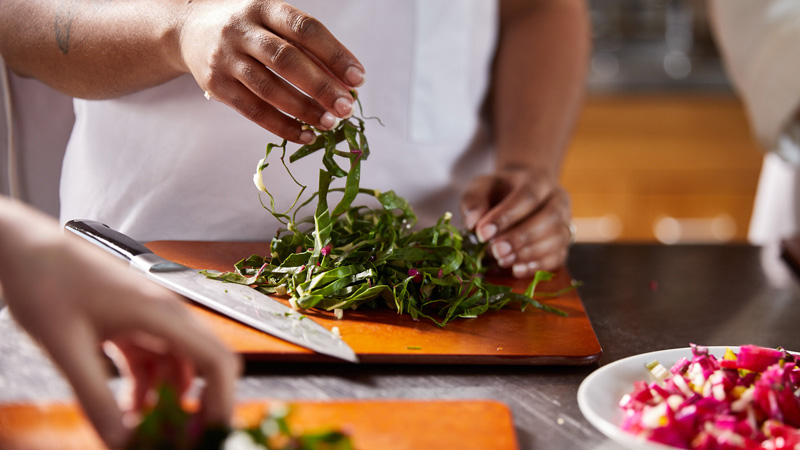
All it takes for successful cooking classes, Goldie Caughlan once said, is “a passion for good food, a card table, and perhaps a skillet.”
Those modest words described the beginnings of PCC’s cooking class program in 1983. Over 43 years, the nationally recognized classes grew from Caughlan’s brief demonstrations on nutritious whole foods into a jam-packed schedule serving virtually every age group, interest and level of expertise.
The cooking class era officially ended along with its summer camp sessions on August 28, 2026. The co-op will no longer offer regular culinary education, though classrooms are expected to remain open for member events and ongoing community education and collaborations.
The program’s operating costs have risen unsustainably while enrollment declined, CEO Krish Srinivasan said when announcing the closure. “The program has operated at a considerable loss for years, and the trajectory shows no sign of changing.”
At its peak PCC offered more than 1,600 classes annually in dedicated classrooms at eight stores, with participants spanning generations. Students returned regularly to build practical skills and to build community. The program was honored beyond the Northwest, earning a cooking school award of excellence from the prestigious International Association of Culinary Professionals (IACP).
The initiative formally began as “FoodWorks!”, changed names to “PCC Cooks” in 2004 and was more recently titled “PCC Cooking Classes.”
In every incarnation, it was an education.
The history of PCC cooking classes
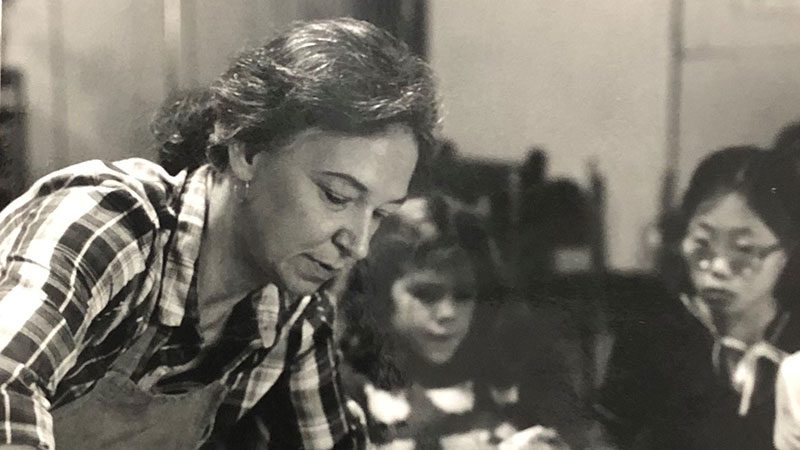
Goldie Caughlan, PCC’s legendary nutrition education manager, was galvanized to join the co-op in 1973 after reading Frances Moore Lappe’s “Diet for a Small Planet” in an anthropology class. She had questions about the then-unusual ingredients she found while searching for more nutritious foods and became deeply involved with PCC, joining the board and organizing natural food fairs.
As early as 1978, PCC offered some informal classes on nutrition and food preparation. One of the first advertised was “The Conviviality, Economy, and Healthful Variety of the Soup Pot.” The lessons extended beyond food into topics like doing taxes or installing home insulation.
Caughlan moved from volunteer to co-op employee in part to organize those casual offerings into a thoughtful and food-focused program. In a 2019 oral history, Caughlan said she started the cooking school in 1983 because “how food is accessed is so important.” Along with basic kitchen skills and nutrition, she felt crucial knowledge should include whether the ingredients were local, how they were grown, and “who are the people who do the grunt work, the dirt work” in the fields.
Caughlan told the Cornucopia Institute in 2014 that she added food training sessions for all staff and free introductory lectures for shoppers to the program, “firmly believing that Americans needed to cease relying on over-processed foods and relearn how to shop and prepare whole foods.”
The program was successful right from the start, she said, despite taking place in some “bizarre” locations like crowded basements and back rooms. A member who attended the 1983 “Whole Foods Kitchen” and “Wholegrains and Flours” workshops cheered the new program in Sound Consumer, writing that both classes were “extremely informative and worthwhile (not to mention delicious)!” and taught vital information. The early focus included vegetarianism, bulk foods, practical skills like pressure cooking, new-to-many ingredients like “The Joy of Soy.”
It didn’t take long for both the number of classes and the scope to expand. Global cuisines were featured widely, from Indian to Vietnamese to specific regional specialties like Sichuan favorites or Indonesian Rijsttafel, at a time when few such learning opportunities existed in Seattle.
Popular children’s classes also joined the lineup, from toddlers to teens. The summer camps began in the early 1990s, creating “probably the oldest, most established kids program in the Northwest,” former culinary program director Sephi Coyle once said.
The goal was to inspire a love of eating and to build skills that went beyond following recipes, empowering children “to take control in the kitchen and to have fun in the kitchen,” she said.
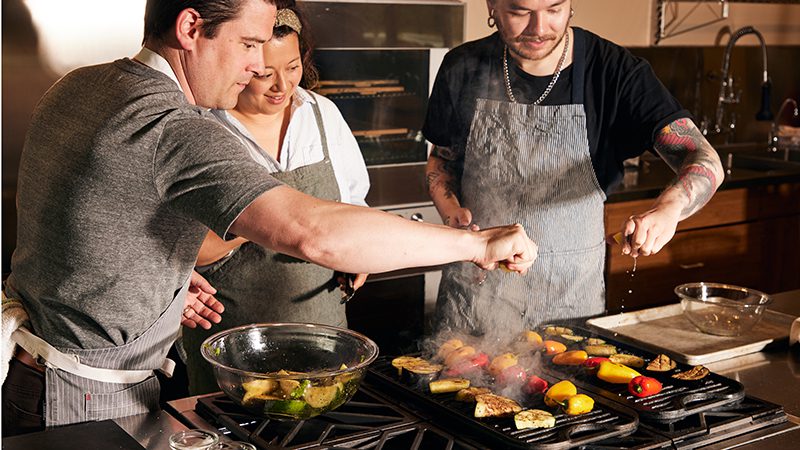
PCC’s broad lineup of instructors offered expert advice on every culinary corner: Macarons. Knife sharpening. Onigiri. Christmas tamales. New classrooms opened along with some of the new PCC stores, providing professional and eco-friendly teaching kitchens. And when public gathering spaces shut down during the COVID-19 pandemic, the classes went virtual from the teachers’ home kitchens. In just one of the inspired collaborations, elementary school students learned cooking virtually through an 11-week PCC course, taking on everything from vegetable fritters to pot stickers.
For many years the classes were taught by guest instructors who rotated through different PCC locations. Restaurant chefs or other local stars occasionally stepped in for one-time presentations. Class aides were volunteers in the earlier days, chopping vegetables and cleaning dishes in return for a PCC gift card and the chance to learn the techniques and recipes. The assistant positions ultimately shifted to paid roles and, more recently, stores have had a dedicated staff chef teaching all classes at that location.
Legacy of PCC cooking classes
It’s hard to even start listing all those who made major contributions to the program’s success. Mary Ann “Mim” Collins, the first teacher Caughlan hired in 1983, built a dedicated fan base for her classes on macrobiotic cooking and beyond. Marilyn McCormick became an instructor in 1994 and began managing the program in 2001. McCormick retired in 2015 and passed the chef’s knife to Alicia Guy, who headed the program until Sephi Coyle took over in 2019 and then Ed Kernan in 2024, with culinary education specialists Arianna Garella and Halle Braswell. Writer Jackie DeCicco helped develop courses and regularly produced a plump catalogue full of tempting class descriptions, among other responsibilities (PCC’s 2018 cookbook, “Cooking from Scratch,” was dedicated to DeCicco after her death.)
Cookbook authors and local authorities abounded as teachers, including Cynthia Lair, founder of Bastyr University’s degree program in Nutrition and Culinary Arts; chef and author Becky Selengut; Thai cooking expert Pranee Halvorsen; Laurie Pfalzer of Pastry Craft and countless others. Staff nutrition educators like Nick Rose and Marilyn Walls led regular store tours and nutrition educator Leika Suzumura taught classes like “Meals Within the Family Budget.” Chef and vivacious cooking show co-host Lynne Vea, creator of PCC’s most popular online recipe, taught classes as well as leading store demonstrations during her 22-year PCC career.
Many instructors taught in PCC classrooms for years if not decades, some even seeing second generations joining them at the table.
Nancy Schatz Alton wrote in a 2004 Sound Consumer article how her novice cooking life changed after attending Lair’s “Feeding the Whole Family” class.
“I had never cooked lentils before, and cauliflower wasn’t high on my favorites list, but the Curried Lentils and Cauliflower dish was divine. Plus, winter greens frightened me. I imagined they were time-consuming to prepare. I was shocked at how easy and quickly they cooked up, and I relished their simple flavor,” she wrote.
Big strides followed. Alton became a cooking class assistant and learned about grains at “Eating Well with Food Allergies” with Marie Donadio. She planned a festive meal with friends after Gail Simon’s class on “A Vegetarian Winter Holiday Feast.” When she was ready to have children, “Organically Grown Babies” with Jennifer Enich helped her plan for the next generation. And when her newborn was old enough, she wrote, she looked forward to enrolling her in kid camps too.
Classes went full circle in other ways too.
Omid Roustaei, “The Caspian Chef,” was working in biotech in 1998 when he took a Foodworks! class that sparked a second career as a culinarian. He later returned to teach at PCC, leading the same class that had inspired him to enter a new life.
Class titles are like an Eras tour through modern culinary history. The interests of PCC members and shoppers encompassed almost every part of life, with common threads of nutrition and community. (Whether demonstration or hands-on, DeCicco once said, one of the very few classes that drew no signups was “Cooking for One.”)
“Although it’s been years since I’ve taken a PCC Cooking class, it’s remarkable how I still rely on lessons learned from the classes I took in my 20s and 30s,” Alton said in an email after hearing the closure news. She said they were integral to building her confidence in the kitchen.
“It’s where I first tasted millet and quinoa and learned how to peel and slice ginger. My recipe binder still encases the handouts from my classes, and I reach for these recipes often. Every Thanksgiving, I make Cranberry Chutney from A Vegetarian Winter Holiday Feast class, and every year my relatives rave about this dish.
“My kids (now ages 24 and 21) grew up eating chicken teriyaki and vegetables that I first made in one of cookbook author Cynthia Lair’s classes.”
And yes, she said, that newborn did eventually wind up in the classroom.
The program brought our community together through food, Srinivasan wrote. And its legacy will last.