
A guide to Washington cherries and cherry season

During cherry harvest, says Mark LaPierre, “everything starts in the dark.” At LaPierre Farms in Zillah, crews of experienced harvesters start work as early as 4 a.m., while they’re still cool from the night air.
Cherries are delicate, quick to bruise if pulled from trees in clusters; even the wind can leave a mark. Experienced harvesters balance atop ladders, picking high on the stem and taking care not to handle the fruit. By late afternoon, trucks filled with bags of LaPierre Farms organic cherries are headed across the mountains toward Seattle.
The LaPierres coordinate extensively with PCC on trucks and timing so that fruit can be in the produce section just a day or two after harvest—a speed that makes a particular difference when we’re talking about something as fragile as a Rainier cherry. “The idea is the consumer is the first person to touch the actual fruit,” says production manager Garrett LaPierre.
Across central Washington, farms like LaPierre kick into high gear when the cherry season begins—the opening salvo of a summer filled with stone fruit. Sure, we’re known for our apples, but Washington is also the nation’s top producer of sweet cherries, according to the USDA. And cherries’ brief growing season and short shelf life inspires a bit more drama than the sturdy, reliable apple. Even Seattle-Tacoma International Airport feels the effects of cherry season; the number of outbound cargo flights can triple in July thanks to freighters headed to Asia, their holds filled entirely with Washington cherries.
But locally, we’re fortunate to simply keep an eye out at the grocery store, where spotting the first Rainiers of the season is a sweet harbinger of summer.
When Is Washington Cherry Season?
The harvest usually begins in early June and can run through early September, according to the Northwest Cherry Growers’ most recent annual report. Of course, it varies slightly by year. And while some might describe cherry season as starting in May, or ending in late August, most people agree, the fruit is at its juiciest peak in the month of July.
Organic cherries like LaPierre’s crops are rare: Not quite 3% of Washington’s cherry crop is organic, according to that same report.
Washington is known for its sweet cherries, the big, sugar-plumped fruit that tastes great right off the tree. When it comes to tart varieties like the Montmorency, best baked into sweet desserts, our status isn’t nearly as impressive. Washington ranks only fifth in sour cherry production; hats off to Michigan, which harvests nearly three-fourths of the nation’s “pie cherries.”
How to Choose and Store
Fresh Cherries
First order of business: Inspect the stems. They should be green and pliable, but most of all still attached, according to AllRecipes. Removing a cherry’s stem shortens its already-fleeting window of freshness. No surprise, the best fruit is plump, glossy, and firm to the touch.
Don’t wash fruit as soon as you bring it home—that’s a common mistake, according to guidance from Wenatchee’s Stemilt Growers. Leaving moisture on cherries can make them decay faster. (Cherry orchards even employ helicopters to blow fruit dry after heavy rains.) Wash right before you plan to eat them.
Keep your cherries cool, preferably in the refrigerator. Store them away from stronger-smelling foods, like onions. If the summer abundance is overwhelming your kitchen counter, cherries also freeze well to pull out later for smoothies or certain desserts.
Washington’s Most Popular Sweet Cherry Varieties
About half the cherries grown in Washington are Bings, at least if you go by the USDA records for acreage planted. They’re large and heart shaped, with glossy dark skin and juicy flesh that takes like the platonic ideal of a cherry.
Sweethearts—milder in flavor and moderately large—come in second, at a distant 11 percent, followed by slightly tart Chelans. Rainier cherries might be the state’s most iconic stonefruit, but they’re only about 7 percent of the state’s harvest.
 Rainier Cherries from LaPierre Farms
The Story of Rainier Cherries
They’re named for the mountain that hovers majestically in the distance (itself originally named Tahoma), but Washington’s best-known homegrown cherry isn’t nearly as sturdy as its namesake summit. Rainiers are tender and thin-skinned, with a shorter harvest window than versatile Bings.
These cherries are prized for their sweetness and memorable colors—not to mention their limited availability. The Washington State University Tree Fruit program categorizes Rainiers as blush cherries (Bings and other darker cherries are mahoganies). WSU should know—it’s where Rainiers were born. According to the university’s official history of the Rainier, a breeder named Harold Fogle cross-cultivated Bing and Van cherries at the WSU research station in Prosser in 1952. As the story goes, Fogle was trying to make a new variety of Bing to help extend cherry season. Instead, thanks to recessive genes, he ended up with a golden-tinged cultivar, its flavor as distinct and delicate as its appearance.
At first, orchards planted Rainiers to help cross-pollinate crops of Bings, which can’t bear fruit without an assist from a compatible tree. It wasn’t until the 1980s that growers realized what a delicacy they had in the Rainier.
As delicacies go, this is one of the sweetest. A cherry’s sugar content is measured on a scientific scale known as Brix. Bings usually clock in around 18 to 20 on the Brix scale, according to Oregon State University’s Extension Service. Rainiers nudge closer to 23. That means their flesh is approximately one-fifth sugar, according to WSU.
By some estimates, Washington farmers lose one-third to one-quarter of each Rainier crop to hungry birds. Clearly, humans aren’t the only ones who value that sweetness.
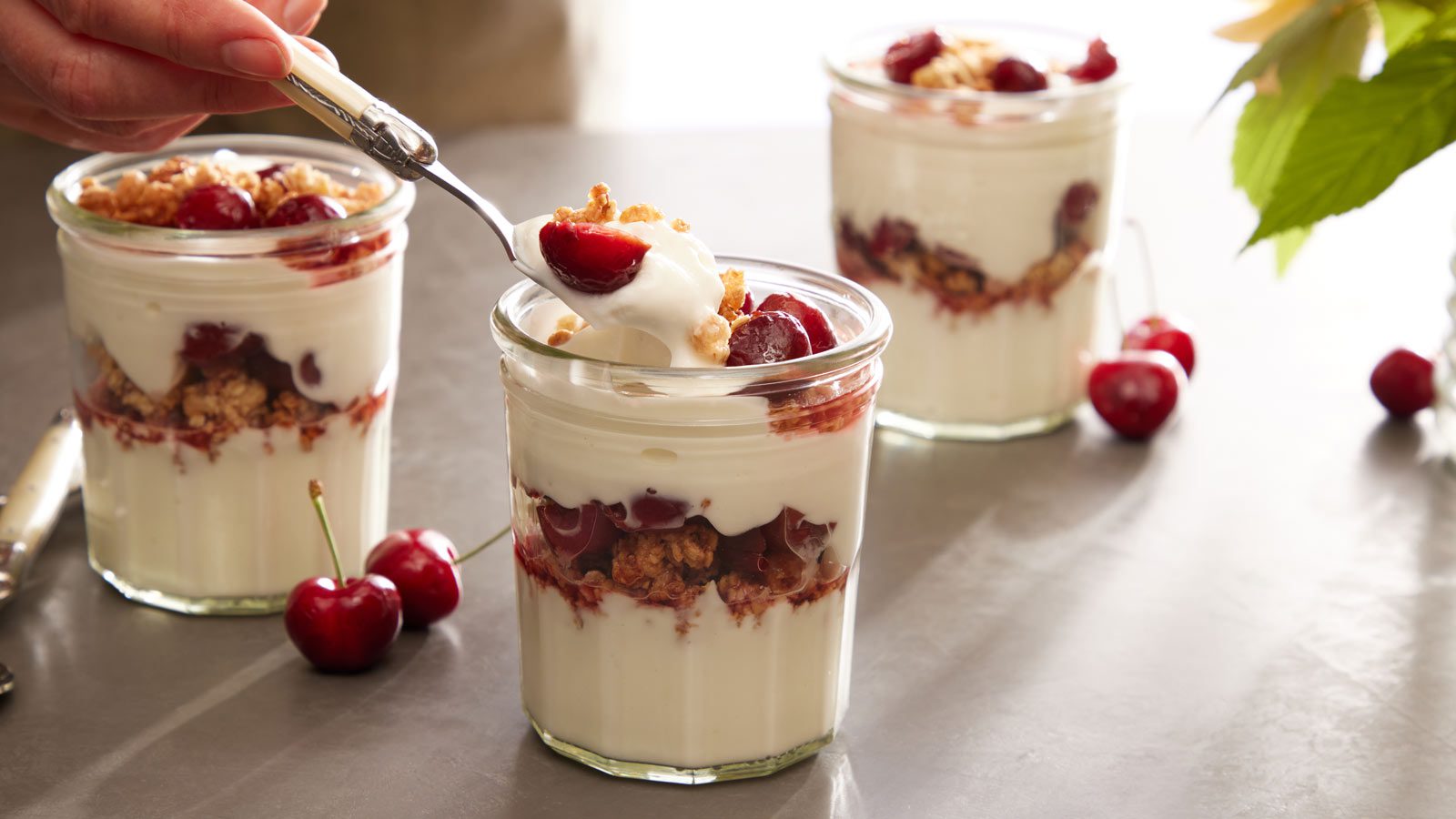
Recipes using fresh cherries
Is life a bowl of cherries? It’s hard to resist eating them fresh in season. But if you want to enjoy them a few other ways, fresh cherries are also great in these recipes:
Bread salad with cherries, goat cheese and arugula
Quinoa salad with cherries and arugula