
Pi Day Pie Baking: A Sweet Math Tradition
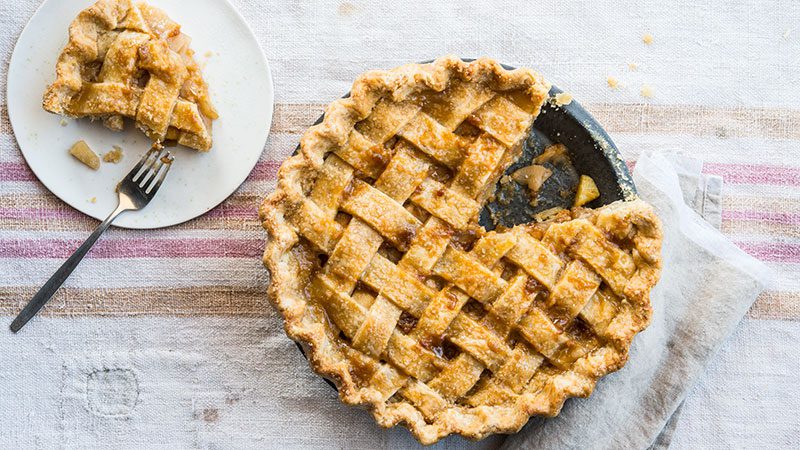
Every day can be pie day. But only one, March 14, is also the infinitely celebratory, circular and delicious Pi Day. PCC’s bakers, chefs and teachers have great tips on making the best crusts and fillings possible for the spring festivities — and beyond.
What is Pi Day?
First, why are we preparing for pie on March 14? Celebrated with both mathematics and flaky pastry, Pi Day honors an irrational number with (ironically) more rational backing than most commercial calendar-fillers of “National (fill in the blank) Day.”
Pi is the number representing the ratio of a circle’s circumference to its diameter. It’s roughly 3.14 (hence the identification with March 14), but its decimals go on forever without a repeating pattern. Awareness of the constant has been around for millennia, Greek mathematician Archimedes is credited with precisely calculating it around 250 B.C.E., and the constant has been associated with the Greek letter “pi” since 1706.
Now, jump a few centuries forward. The sweet and savory appreciation known as Pi Day was created in 1988 by the late physicist Larry Shaw at the San Francisco Exploratorium, where participants held a parade in a circle in honor of pi, and ate fruit pies. It multiplied from there, becoming an annual mainstay of middle school math classes and bakers who appreciate wordplay. The U.S. House of Representatives passed a resolution in 2009 supporting the Pi Day designation as a vehicle for math and science education.
Pie making basics from PCC
Baking is both an art and a science, and pie leans into both. You can certainly buy a pie for Pi Day — PCC has a great selection! — but making your own is a creative and satisfying skill.
The best advice we have for making your own, from PCC culinary program manager Arianna Garella, is that the best pie choice is the one you will actually bake.
Garella said, “Don’t get overwhelmed by fussy recipes if that isn’t your speed; choose a recipe that aligns with the time you have available. Some days I use a pre-made crust and other days I make it all from scratch and have time for a blind-bake! Knowing your parameters will set you up for success.”
For those making a scratch pie crust, here’s a PCC Classic Butter Pie Crust recipe with just four ingredients: flour, butter, salt and ice water.
Technique matters as well as ingredients. Some tips on both:
- Everything should be cold before mixing — put the measured flour and even your mixing bowl in the refrigerator or freezer for a half hour or so before you begin.
- Everything should be cold after mixing! Some bakers chill the dough at least 30 minutes before rolling it out (local pie-making expert Kate McDermott suggests at least an hour), others chill the rolled-out crust 30 minutes before baking.
- While many recipes rely on food processors, we recommend mixing by hand for the flakiest crust. “Butter has three components — milk solids, milk fat, and water. When butter gets hot it melts and the water evaporates, pushing apart thin layers of flour to create flakes,” Garella explained. “If you want big flakes, use your fingers to pinch the butter into the flour before adding any liquid; pinching in the butter guarantees larger flat discs of butter (the size of a dime is ideal), rather than the small round chunks you get from a food processor.”
- All-butter crusts are popular, but PCC retail deli manager (and baking specialist) Tristan Ambrose prefers a combination of vegetable shortening and butter for the best flake and flavor. The venerable Joy of Cooking uses that approach too, with a recipe demo here.
- For vegan pie bakers, Ambrose suggests using coconut oil for crusts in place of butter. The oil adds a wonderful flavor that complements many pie fillings, she said, particularly cream pies such as coconut, chocolate, banana or lemon meringue.
- For another alternate, Ambrose favors a richer, more shortbread-style crust with a bit of added sugar (this recipe suggests a tablespoon) and an egg yolk mixed into the ice water. “My crust becomes a dessert within the dessert itself, the egg and sugar also gives a lovely brown color to the crust.”
- “A soggy bottom crust is no one’s friend,” says Ambrose — and Garella notes that sogginess is a particular risk with creamy fillings. To ensure a crisp crust, blind bake the empty crust first, keeping it flat with pie weights or dried beans. You can even make use of your spare change, said Christa Demment, co-op chef of the Bellevue PCC. “I have a jar of pennies that have made many moves and helped bake many pies over the years. Pie Crust Pennies is the label on the jar and it totally works!”
- Once your crust is set, balance flavors in the filling: Garella notes that “sweet treats benefit from a touch of salt. A pinch of salt in your apple pie filling will take it from great to spectacular. If it’s safe to do so, I always recommend tasting the filling before it goes in the pie.” Ambrose suggested being mindful of the sugar ratio to fruit when making a fruit pie: “Let the fruit shine by keeping some acidity to balance out the richness of the crust, and the additional sugar added to the filling.”
- For some general tips on thickeners and sweetener substitutions, see this article from the Sound Consumer archives.
- Finally, consider the bite: “Texture is key in pie making — from the thickness of the crust to the size of fruit to the gooey-ness of the filling,” said Garella. “Think about your preferred bite and make a pie that you want to eat!”
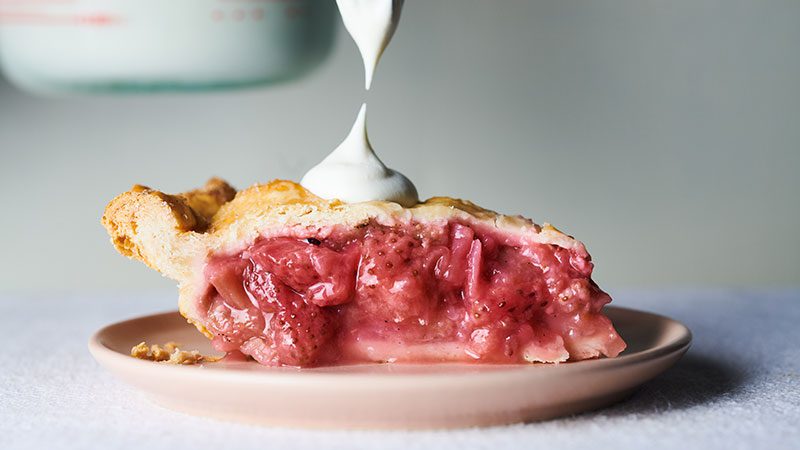
Top Pie Recipes from PCC
Expert pie baker and author Kate Lebo writes here about “the bliss point” of pie baking and shares her recipe for plum-thyme pie.
PCC’s most popular website recipe is Lynne Vea’s Old Fashioned Brown Sugar and Cinnamon Apple Pie. Look here for the story behind it, and get the recipe here.
There’s even more available for apple pie fans, look here for The Best Apples for Apple Pie.
Spring is coming and a rhubarb-strawberry pie is here c/o former PCC cooking instructor Laurie Pfalzer of Pastry Craft.