How to eat organics on a budget
Why don’t more people eat organic foods?
While a major study found 80% of U.S. households purchased organic food at some point, the “overwhelming” reason people say they don’t is that it’s too expensive, according to the Organic Trade Association.
Organic foods do average higher production costs than conventional foods, according to the U.S. Department of Agriculture (USDA). They also receive fewer subsidies. That means organics are frequently priced higher than conventional counterparts. (If you want to know why certain items stand out as expensive, here’s a great local explainer on organic red peppers.)
In the big picture, there’s real value to issues like avoiding exposure to chemical pesticides through organic foods — but that doesn’t help with daily expenses.
Fortunately, even if politics and economics don’t change, there are ways to eat organic food on a budget. Even better, there are smart ways to shop organic without major compromise. Recommendations include:
Seek out store brands
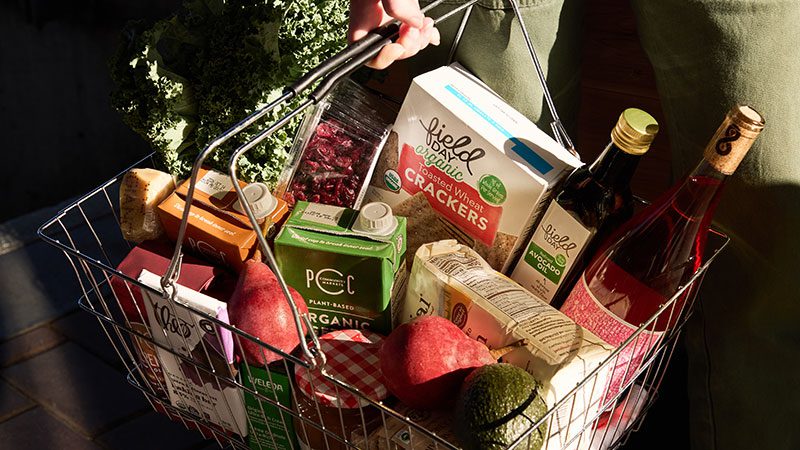
At all PCC stores customers can look for the budget-friendly Field Day line of products, owned by natural foods distributor UNFI, which is certified as USDA organic and stocked at co-ops nationwide. Field Day’s 250+ products range from canned beans to coconut milk, from all-purpose flour to extra-virgin olive oil. The staple goods are sold at competitive prices that sometimes beat conventional pricing.
Buy selectively
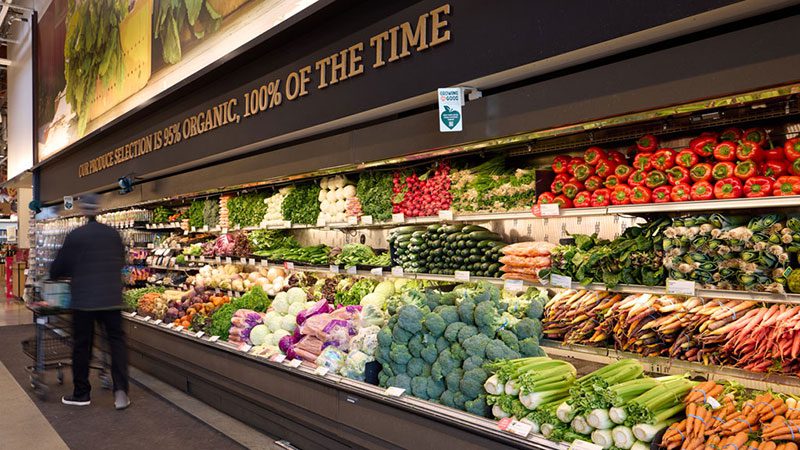
Organics doesn’t have to be an all-or-nothing commitment. (Even PCC’s produce department, one of the top in the country for organic fruits and vegetables, is committed to 95% organics.) Many people consciously prioritize organic for certain foods — e.g., choosing organic milk for children, or choosing organics for fruits and vegetables on the Dirty Dozen list but not those on the Clean 15. Always look for sales and weekly specials too.
Which organic products have the biggest price gap? That varies dramatically by season, place, suppliers, and other factors. A recent Lending Tree report analyzing USDA data, though, found that organic iceberg lettuce by far topped the list during the time period measured, priced at 179% more than conventional iceberg. Romaine hearts in the same study were just 18% more.
Save at the bulk bins
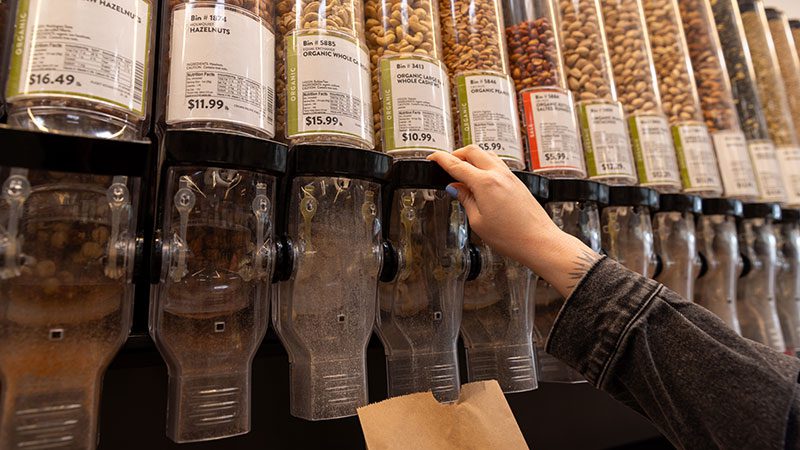
Shopping in the bulk section saves money in two ways: First, bulk products are often substantially less expensive than packaged versions. Second, buying bulk allows shoppers to buy just the quantity they need, avoiding excess spending (and food waste). Around 65% of PCC’s bulk items are certified organic and labeled accordingly.
(See our Secrets of Shopping the Bulk Bins here.)
Embrace the freezer
Organic produce, in particular, can be less expensive when frozen for the same reason conventional products can be: Frozen goods are harvested at their peak. Unlike fresh produce, frozen products are not under a tight spoilage timeline where they have to be quickly transported, purchased and eaten. For most frozen items, home cooks can defrost only the amounts they need, reducing food waste and the associated costs.
On the other side of the freezer savings, if you’re able to buy and/or cook in larger quantities at home and then freeze the extras, you’ll generally reap discounts from buying in larger quantities. The total up-front costs are higher, but the costs per unit are generally cheaper, so you’ll save money over time.
(See our feature on How the Freezer Became my Superpower here, and look here for details on What You Can and Cannot Cook with Frozen Produce.)
Go seasonal
It’s generally more affordable to buy fruits and vegetables in season, and that goes for organic as well as conventional produce. Strawberries, for instance, retail at nearly 60% higher in the U.S. in December, when they are typically imported, vs. peak-season berries in June.
We’re lucky here in the Northwest to have year-round options for local produce. (We can thank the late Binda Colebrook for opening some of those doors.)
See our guide to Seasonal Fruits and Vegetables here and take a look here for the latest in non-local but definitely seasonal winter organic citrus, sourced through Organically Grown Company, the Portland-based PCC supplier.
Use it all
Get more mileage from more costly organic ingredients by making full use of them. That can be a lot simpler and more do-able than the common recommendation of using carrot greens to make carrot-top pesto! In the book “Perfectly Good Food,” for instance, authors Margaret and Irene Li offer fresh tips like using produce bags to keep vegetables fresh longer in the refrigerator and refreshing wilted greens in an icy water bath. Local author Jill Lightner, who collaborated on PCC’s cookbook “Cooking from Scratch,” wrote a book entirely on avoiding food waste, “Scraps, Peels & Stems.” Here are some of her recommendations on saving money while also improving the planet. (A favorite tip from Lightner: Aquefaba, the liquid from canned beans that’s become a popular egg substitute, works when taken from any variety of canned beans, not just chickpeas.)
Be a PCC member
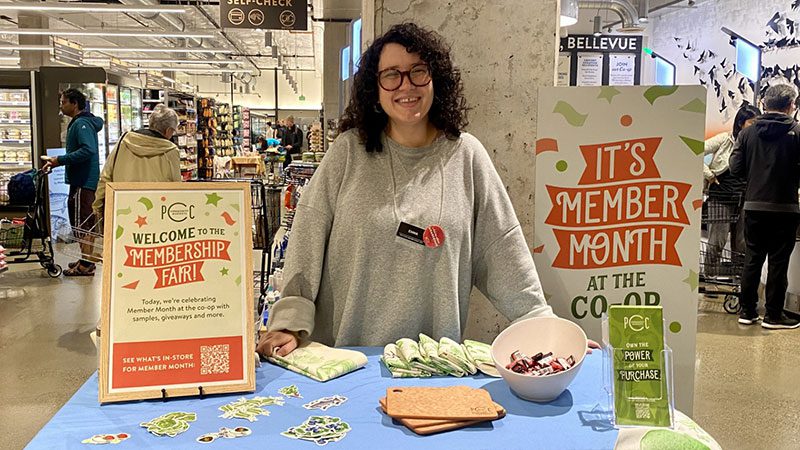
PCC membership offers many benefits for its one-time $60 fee, including financial rewards as well as purpose-driven and community-focused connections. Last year, PCC members received more than $180 worth of special offers and savings, many focused on organic products. Sign up here.