
How to Stock a Spice Rack: Essential Spices Every Kitchen Should Have
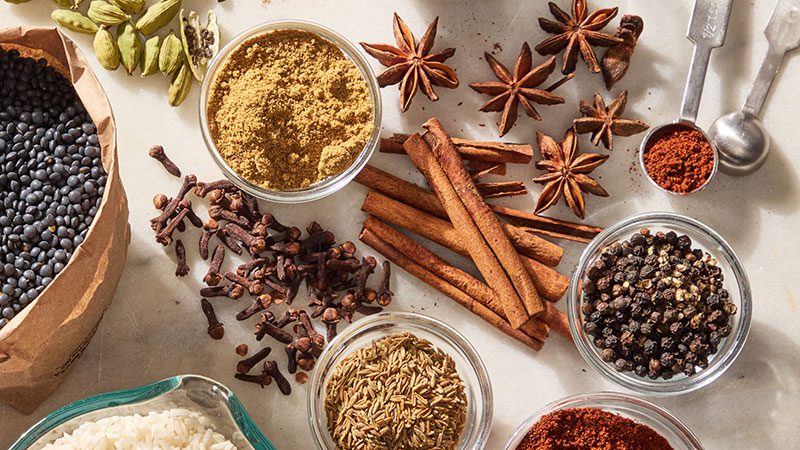
Spice collections often accumulate haphazardly, like a pile of shoes by the front door. Too often they include jars that languish in the cupboard for years between infrequent uses.
Putting even a small amount of effort into building an intentional spice collection can set you up for transformative cooking. And it’s even possible to accomplish on a modest budget.
Essential Spices to Keep in Your Pantry
Kausar Ahmed co-founded Karachi Kitchen with her daughter, Sadaf. Their Seattle-based Pakistani food company specializes in vibrant spice blends, but Kausar, a PCC Co-op Chef, also knows how to pare things down to the basics: Over the years, she has helped a few of her adult children set up spice pantries when moving into new apartments.
If you’re truly building a pantry from scratch, salt and pepper are the obvious starting point. (Sure, technically salt is a mineral, but why quibble?)
Kausar’s other daily must-haves include red chili powder and paprika. Of course, she notes, essentials can vary depending on what you cook. “In my case, definitely cumin and coriander and turmeric.”
The starter spice kit chef Gordon Ramsay shares with Masterclass includes all of Kausar’s barest-bone necessities and layers in other worldly additions, like cinnamon, nutmeg, and sumac, which he appreciates for its “tangy, lemony flavor.”
Longtime food personality The Pioneer Woman divides her roster of essential spices into dried herbs (like oregano, which she uses in both Mexican- and Italian-inspired cooking), seeds (fennel and celery), and “sweet” spices like cloves and ginger, that are handy for baking but also have plenty of savory uses. Other usual spice rack suspects, like garlic powder or onion powder, are handy when the fresh versions aren’t around.
This lineup lets you create a range of blends and rubs. But depending on what, and how, you cook, storebought blends can be just as essential as pure spices. Kausar personally always has chaat masala around to sprinkle on top dishes and garam masala to lend depth to just about any stew, soup, or curry. “You want something you know and trust when you are short of time.”
The Benefits of Shopping Bulk
When buying spices, freshness is paramount. So buying in bulk can seem counterintuitive at first. But a few strategies exist to help shoppers wring maximum benefit out of the bulk spice shelves. Stocking essentials like black pepper or paprika in bulk will bring your cost down; it can also reduce the need for single-use packaging.
Frontier Coop, which supplies PCC’s bulk spices, advises using the bulk spice section to sample new-to-you flavors, test driving a pinch or two before confirming you should invest in larger quantities. Additionally, if you’re making a recipe that calls for a costly ingredient like saffron, buying bulk lets you purchase only as much as you need.
Tips for Storing Spices
Stay fresh: Amanda Bevill, owner of World Spice in Pike Place Market, sums it up perfectly in her cookbook, World Spice at Home: “As spices age, they don’t really ‘go bad,’ they just kind of fade away…and some fade faster than others.”
Your mission to keep spices as fresh as possible for as long as possible has three key enemies: Light, heat, and air. Bevill recommends storing spices in airtight containers made of a nonreactive material, like glass. If you happen to be one of those Type A cooks (or at least aspire to be), buying a set of uniform glass jars to hold your bulk spices is also a great way to keep things organized.
Grind as you go: The U.S. Department of Agriculture (USDA) says whole spices maintain their quality for two to four years, ground spices for two to three years. Though ask a chef or a spice professional like Kausar Ahmed, and that number looks more like six to 12 months for ground spices.
“Having whole spices is great, because you can grind them as you go,” she says. She even collects different type of peppercorn crushers or grinders.
Stay in sight: Lior Lev Sercarz, founder of the New York–based spice company La Boîte, has a different take on spice storage. In his book, Mastering Spice, he advises keeping your spices at the back of your kitchen counter. When spices are in plain sight, to his mind, “you’ll likely use them at their peak freshness.”
Keep track: Sercarz likes to write the purchase date on his spices, either on the label or on a piece of tape you can then affix to the jar.
Test often: If you’re unclear whether a spice still has life, America’s Test Kitchen suggests a quick exercise: Rub a small amount of spice between your fingers. “If it still has a strong aroma, then it’s still good.”
PURCHASING SPICES IN BULK
Bulk spices are available at every PCC store except the downtown PCC Corner Market. The co-op stocks more than 100 varieties of bulk herbs and spices, though the exact selection varies by store. They include every “essential” listed above and more, from anise seed to cayenne to whole nutmegs to tarragon to a za’atar blend. Spices are sold by the jar as well.
See here for our overview on Secrets of Shopping the Bulk Bins.