
Tilth grants turbocharge local sustainable farming
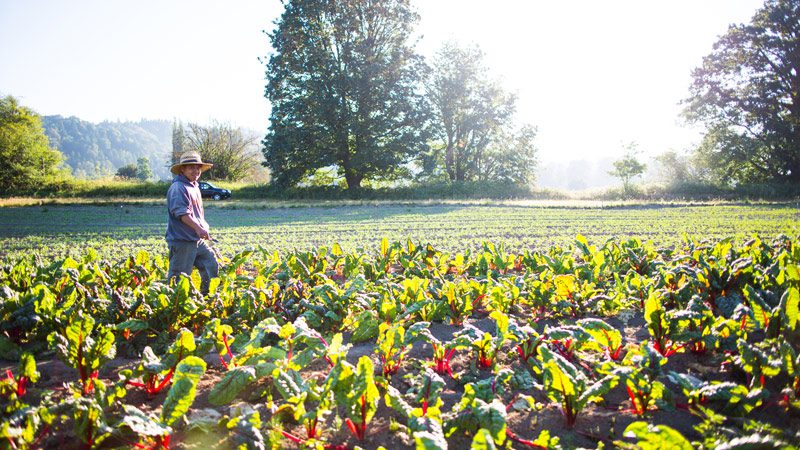
Growing organic food on the Olympic peninsula, farmers realized a critical weak link in their systems. Most tools to improve soil health— fertilizers, compost, agricultural lime— were imported.
A 2026 grant from the Tilth Alliance’s Washington State Organic and Sustainable Farming Fund (WSOSFF) will help reverse that vulnerability, protecting local farms from supply chain disruptions and reducing their impacts on the climate.
Using waste materials from a collection of Jefferson County ecosystems – including carcasses of the invasive European Green Crab – the partners will create locally sourced liquid fertilizers, potting mix and compost. The $25,000 grant for the project, headed by the 245-acre Mozaic Farm in Chimacum, isn’t a lot by the standards of big agribusiness. But the lab testing, hauling fees and other project essentials it funds would otherwise be completely out of reach for small producers.
Supporting sustainable farming
The grant was just one of 67 issued this year, ranging between $2,800 and $25,000. They were supported by funding from PCC Community Markets, a longtime Tilth partner, and by the
HumanLinks Foundation The grants encourage organic and regenerative farming, providing an essential boost to small and midsize farms who often struggle to access such support. They prioritize projects that improve soil health, increase biodiversity, conserve water, and otherwise mitigate the effects of climate change.
“Supporting local farmers through the WSOSFF allows PCC to invest in climate action that is rooted right here in our own food system,” said Mike Wenrick, PCC’s Director of Purpose. “These grants help farmers adopt innovative practices that reduce emissions, sequester carbon, improve soil health, and strengthen the environmental resilience of farms across Washington.”
Rebecca Robinson, PCC’s quality standards manager, served on the grants committee.
The grants have supported everything from irrigation to seed dryers to a grain mill to cardboard shredders for a worm farm to an electric compost-turner that will save both on fossil fuels and physically exhausting labor. Many farmers and producers collaborate on projects and/or share the equipment and benefits with neighbors. And as the grants program builds more of a history, its results are an array of bright spots around the state.
For instance, with an earlier WSOSFF grant last year, Mozaic worked on a pilot project creating a locally-sourced compost suitable for organic farming. It was composed from “forest biomass, nuisance sea lettuce from shellfish operations, salmon carcasses from local hatcheries, biochar from the paper mill, and agricultural waste,” according to the application. The experiment produced high-quality compost and an interest in branching out into this year’s projects.
This year’s project adds in the benefit of a needed— and valuable — way to dispose of the carcasses of dead green crabs, an invader that poses “a grave threat to native marine species,” said the grant application.
Ecosystem managers “are placing a high priority on trapping and killing EGC before they can become well established. Each of the last two years fisheries biologists have captured more than a million EGC individuals in Willapa Bay alone. Managers need a way to dispose of the carcasses, and they may prove to be a valuable source of nitrogen, as well as calcium carbonate and other micronutrients.”
Grants supporting local farming
The 66 other grants supported this year are remarkable in other ways, from supporting rotational grazing for grass-fed Icelandic sheep to seed-cleaning equipment that will help a Pullman farm grow local spices. Among the highlights:
- At the nonprofit Oxbow Farm & Conservation Center in Carnation, a $15,000 grant will help provide solar-powered electric fencing to prevent elk herds from eating and trampling crops meant for donation to food banks and other food security agencies. Small numbers of elk have exploded in recent years, ruining more than 20,000 pounds of organic carrots, beets and squash last year, the application said.
- A grant of close to $8,000 will help Willow Bark Botanicals expand from a 1/8-acre plot at Viva Farms, an organic farming incubator, to a full acre growing medicinal herbs and flowers. “Demand for domestically grown herbs significantly exceeds supply,” the owner wrote in a grant application. Customers increasingly seek locally grown materials, she said, concerned about climate instability, supply chain disruptions, and the integrity of imported ingredients. The Tilth grant will help buy commercial drying and storage equipment allowing her — and potentially other farmers— to process their harvests on-site.
- At Windmill Gardens in Sumner, a $11,550 grant will help transform a 54-year-old family-owned nursery into a non-profit site for regenerative food production and education. “Like many legacy farms, the original plan was for the business to pass to the next generation,” but family members chose other paths, owner Ben DeBoer wrote in the application. “As I approached retirement, it became clear that without a new path forward, the land, infrastructure, and decades of agricultural knowledge risked being lost. Working with (incoming nonprofit owners) GoodRoots Northwest over the past few years has reshaped what legacy means to me.” The Windmill greenhouses will be converted from nursery production to regenerative food production, meant to serve up to 1,000 rural households experiencing food insecurity.
For more information on the annual grants, visit the WSOSFF site here.