PCC Value Milk: Organic Quality and Affordability
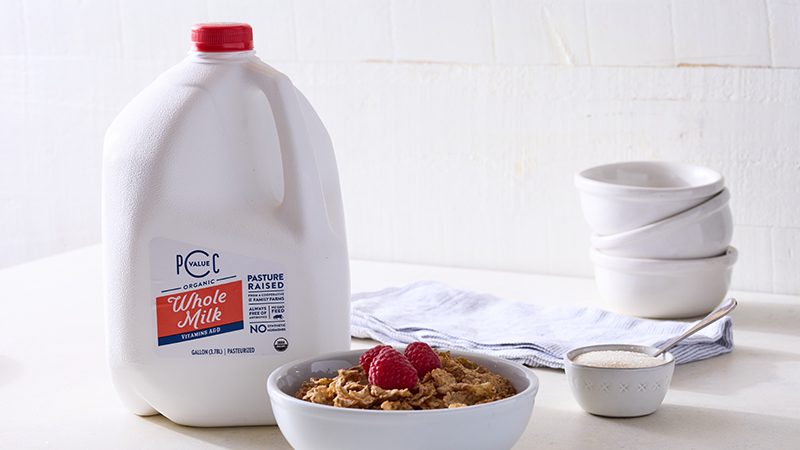
When it comes to PCC Value Milk, two co-ops are even better than one.
The co-op’s certified organic milk is sourced from another cooperative – a group of family farms in Washington state. The milk is part of the PCC Value line aimed at lowering prices while maintaining PCC’s high standards, and is from pasture-raised cows who are raised without antibiotics, synthetic hormones or feed made from genetically modified organisms (GMOs).
The milk’s organic certification means it meets United States Department of Agriculture (USDA) regulations backed by federal law. As PCC’s quality standards detail, “organic certification prohibits added growth hormones, antibiotics, animal byproducts in feed, and genetically engineered feed ingredients. Under organic regulations, ruminants must have free access to pasture during the grazing season, or at minimum 120 days per year.”
It’s a commitment PCC staff have personally witnessed. Adrienne Chamberlain, the co-op’s Private Label Merchandiser, noted that she visited a co-op farm with PCC’s grocery merchandisers and coordinators, and they were “thoroughly impressed” by the living conditions of the cows and by how much support individual farmers were provided by participating in the co-op.
The PCC Value Milk has been a mainstay of PCC’s efforts to provide good value along with high standards.
All fresh cow and goat milk at PCC, though, follows strict quality standards aimed at making humane and sustainable choices for this important nutrition source. Milk carried at PCC stores must either be certified organic or must be fed non-GMO feed.
The PCC quality standard also includes requirements for feed, handling, outdoor access, separation from young, and prohibits growth promotors (such as rBGH) “to ensure our milk comes from cows and goats that are treated humanely and produce nutritious, high-quality milk,” according to PCC’s Frequently Asked Questions (FAQ) on fresh milk.
While organic and pastured-raised milk is generally more expensive than conventional milk, the price reflects the greater costs of production as well as the costs of third-party certifications such as USDA organic. The PCC Value product lines allow PCC to provide high-quality goods that are often the most inexpensive choice on the shelves.