
Authentic food? Take it with a grain of salt
By Tracy Jad Sawan, guest contributor
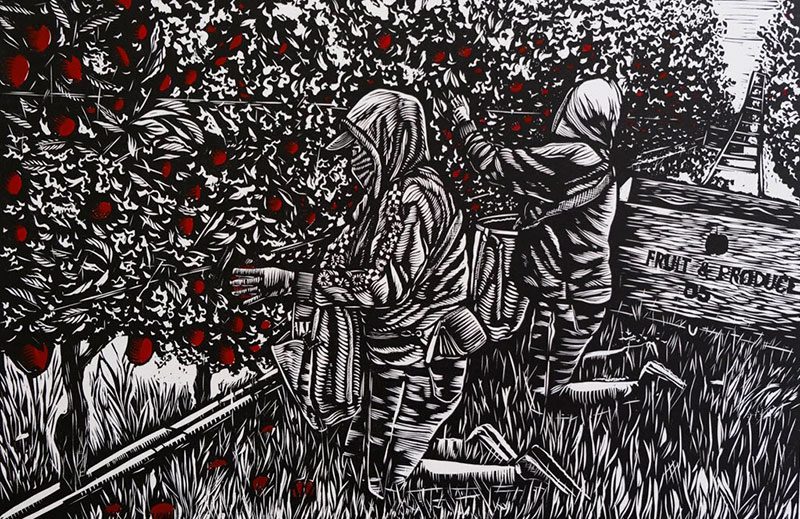
Cultivando el Valle de Yakima, by Christie Tirado
The story of your favorite dish probably begins somewhere else.
Long before avocado toast, pumpkin spice lattes, and Dubai Chocolate took over menus and social media feeds, human movement and cultural exchange were quietly shaping and reshaping what we eat. In times of heightened division and the scapegoating of those who may look (or eat) differently than we do, it’s especially worth remembering that people have always migrated and cultures have long influenced one another, from the music and sports we play to the food and drink we gather around.
Can you imagine Italian cuisine without olive oil, lemon, or tomato sauce? In a parallel universe, it might have turned out that way. Wild olives were first domesticated in the Levant, and the Phoenicians of ancient Lebanon helped establish their cultivation across the Mediterranean region. Lemons, native to Asia, spread more widely in Europe in the Middle Ages through Arab trade, and tomatoes didn’t appear in Italian kitchens until they were brought there from the Americas around the 16th century. What we now think of as Italian food is the result of centuries of travel, trade, and at times, violence.
Italian cuisine is not an anomaly. Potatoes, now emblematic of Ireland, are native to South America. Indigenous peoples in the Andes had cultivated them for millennia before Spanish colonizers carried the crop to Europe in the 1500s, forever transforming Irish diets and, ultimately, diets worldwide. Today, potatoes are grown in more than 100 countries. This widespread adoption has given rise to countless cultural mainstays beyond Irish specialties including potato chips, French fries, latkes, gnocchi, poutine, and aloo gobi.
Apart from being fried, what do fish and chips and tempura have in common? The answer: They probably did not originate from where you think. Though widely considered quintessentially British, the fried fish that inspired fish and chips arrived in England with Sephardic Jewish refugees fleeing the Spanish and Portuguese Inquisitions. Tempura, meanwhile, was introduced to Japan in the 16th century by Catholic missionaries and traders from Portugal.
Even some of the most beloved street foods tell tales of migration. One such story begins with Lebanese immigrants who brought the vertical spit-roasting technique of shawarma to Mexico by the 19th century. The result? Tacos al pastor. Another shows how empanadas — rooted in Middle Eastern pastries that had arrived to Spain with the Moors — were spread around the world by the Spanish, from the Philippines to Venezuela.
Migration isn’t always linear or one-directional. That’s how yerba mate found its way to rural Druze villages in the Levant, carried home by Lebanese and Syrian emigrants returning from Argentina. Okra reached American shores through the trans-Atlantic slave trade, its seeds braided into the hair of West African women; roughly 300 years later, emancipated African-Americans would take foods like cornbread and collard greens with them to Liberia.
We have Central and South America to credit for ingredients like cacao and vanilla. In 1875, when a Swiss inventor combined cacao with sugar and milk, he created the world’s first milk chocolate bar. Coffee — now consumed in greater per-capita quantities in Finland than anywhere else in the world — is native to Ethiopia but started being cultivated in the 1400s just across the Red Sea in the port city of Mocha, Yemen. Around five centuries later, espresso would be developed in Italy.
In the U.S., Ashkenazi Jewish immigrants introduced bagels, established delis, and created the iconic Reuben sandwich. Tex-Mex dishes emerged in the Southwest from Tejano foodways and cattle ranching and cowboy culture. Creole and Cajun cuisines, to varying degrees, brought together the culinary traditions of the descendants of French and Spanish settlers, African-Americans, and Native Americans. And while some food purists may scoff at American-born, immigrant-created foods like hard-shell tacos, Velveeta, chop suey, hot dogs, deep-dish pizza, Philly cheesesteaks, and spaghetti and meatballs, it turns out that many dishes we now consider authentic or traditional may have emerged in comparable ways, just earlier in history.
They say immigration is as American as apple pie — itself a dish with immigrant roots! — but behind this saying, as with many foods we love, there is often a painful history. Throughout time, countless people around the world have had to migrate due to genocide, war, natural disasters, or poverty. Some, like enslaved West African peoples taken to the Americas, had no say in the matter at all. At times, cultural exchange occurred as an unintended byproduct of brutal colonial rule. Many familiar and beloved dishes were not born out of pure choice, but under circumstances of profound injustice.
All this shows is that there’s more to food than what’s on the surface, and the more we dig in, the more questions come up. It’s worth paying attention — to learn who grows and harvests our food, who transports it to and stocks it at grocery stores, and who cooks it in restaurants. How much ends up as waste along the way, and what strain does this complex, global system put on our planet? We might also wonder: Why do some people have access to an abundance of nutritious food while others struggle to feed their families? In today’s world, is it possible for all of us to eat only what’s native, seasonal, and locally produced? Only when we ask questions and acknowledge harms — whether colonization, cultural appropriation, or unethical labor practices — can we begin to take steps toward meaningful change.
Cultural exchange profoundly shaped my own upbringing in Lebanon long before modern globalization. My native homeland, located in Southwest Asia just across the Mediterranean Sea from North Africa and Southern Europe, was influenced by many occupying forces over the centuries, including the ancient Egyptians, Persians, Greeks, Romans, Arabs, Crusaders, Mongols, Ottoman Turks, French, and Syrians. Many of the dishes I grew up with tell stories of journeys that span continents, oceans, and millennia. Take shish barak, one of my favorites, said to be descended from Chinese dumplings that were carried west along the Silk Road, or French desserts like bûche de Noël and galette des rois, now cherished parts of local holiday menus.
Ingredients such as garlic, eggplants, and pomegranates, though not native to our land, have become inseparable from our culinary identity. Religion introduced practices from kosher and halal dietary laws to Lenten and Ramadan fasting, while successive waves of refugees — including Sephardic Jews, Armenians, and Syriacs — each brought their own cuisines as well, further enriching the Lebanese table. Some foods did not arrive from distant lands but spread through migration between rural and urban areas. And the exchange continues to this day — whenever I add fries to my chicken shawarma sandwich or top my ice cream with olive oil, pistachios, and sea salt.

From butterflies to hummingbirds, and from salmon to orcas, migration is a natural phenomenon. It’s neither new nor exceptional. Human movement is as old as humanity itself; we have traveled and traded with each other since prehistoric times. And when we all choose to meet with open minds, open hearts, and reciprocal curiosity and respect, we can create a shared future that is not only more peaceful and prosperous, but also undeniably more delicious.
Tracy Jad Sawan writes about food, family, and memory on her Substack newsletter, What I Cooked When I Couldn’t Go Home, drawing on her family’s Indigenous Lebanese, immigrant, and refugee background. She currently lives in Seattle, where the proximity to the sea and mountains can sometimes remind her of her hometown, Beirut.
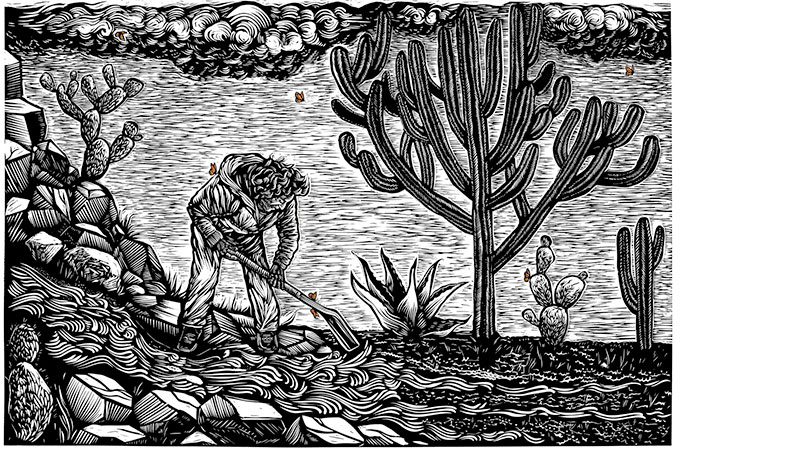
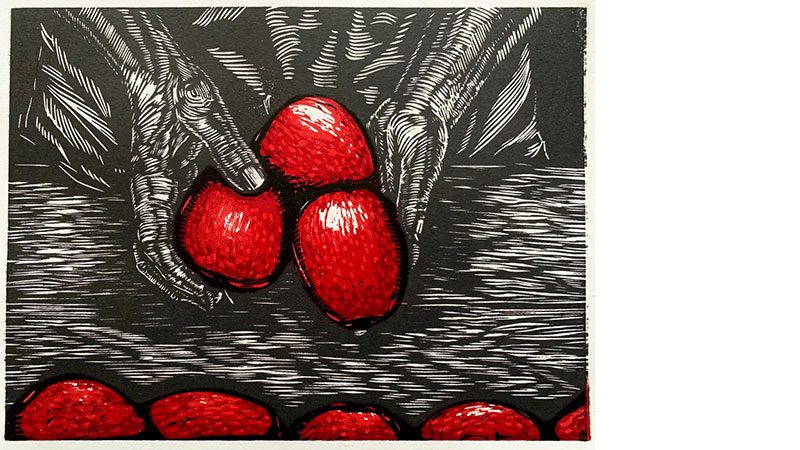
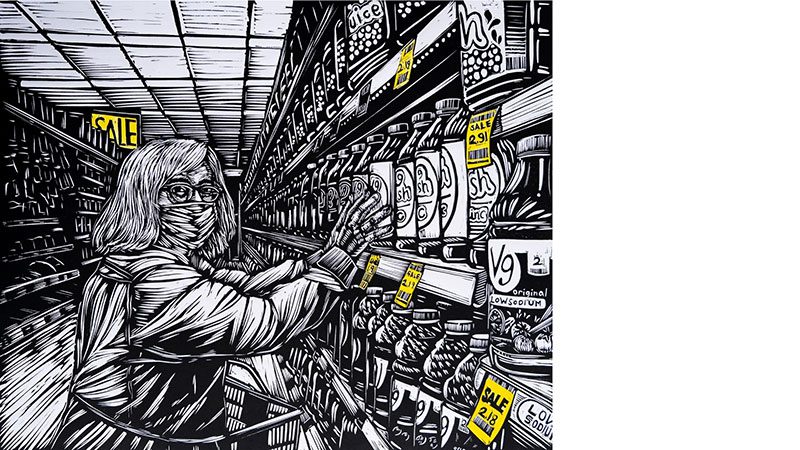
Christie Tirado is a Yakima-based Mexican-American artist and art teacher. Her work explores the impact of migration on culture, identity, traditions, and histories, with a particular focus on labor-related migration within the Mexican diaspora. Visit her website to learn more.
The views expressed by guest contributor/s are solely those of the author/s and do not necessarily reflect the official policies, views, or positions of PCC Community Markets.
The American Table: 10 Foods, Many Origins
Bánh Mì: Came about after French colonizers and missionaries introduced baguettes and pâté to Vietnamese cooking. It later made its way to the U.S. with refugees fleeing the Vietnam War
Barbecue: Like jerk chicken and feijoada, BBQ emerged gradually from interactions among Indigenous American, West African, and colonial European cooking traditions, evolving over time into distinct regional styles
Caesar Salad: Created in 1924 in Tijuana, Mexico by an Italian restaurateur whose establishment was frequented by American tourists avoiding Prohibition
Hamburger: Beef and bread have been eaten together in many places for centuries, but German immigrants in the U.S. are credited with developing the hamburger as we know it today
Chicken Parm: Created by Italian immigrants from Sicily and Naples (with possible German-American influence) who merged Parmigiana di Melanzane with breaded, schnitzel-like meat cutlets. Native to Asia, eggplant had reached the Arab-ruled Emirate of Sicily during the Middle Ages
Louisiana King Cake: Evolved from galette des rois after French settlers arrived in Louisiana and became entwined with Mardi Gras traditions. Variations of galette des rois appear in many places subject to French colonial influence, from Vietnam to Lebanon, Ivory Coast, and Haiti
Sugar: Initially cultivated by Indigenous peoples in New Guinea and later processed in India, sugar spread to the Middle East via Arab and Persian trade, then reached Europe more widely during the Crusades, and eventually made its way to the colonized Caribbean where enslaved African laborers on sugarcane plantations in Barbados first made rum
Meatloaf: Dishes combining ground meat with bread go back at least to ancient Rome, but this version was born in Germany and arrived to the U.S. with immigrants from Germany, the Netherlands, and Scandinavia
Coleslaw: Like meatloaf, coleslaw traces its roots to ancient Rome. It evolved over centuries and was brought to New Amsterdam (now New York City) by Dutch colonists
Irish Potato Candy: Created by Irish immigrants in Philadelphia and popular around Saint Patrick’s Day, this candy resembles a small potato but skips the spud entirely — it’s made with coconut, cream cheese, powdered sugar, and cinnamon