
Can a Cookie Help the Climate? PCC’s Kernza Experiment
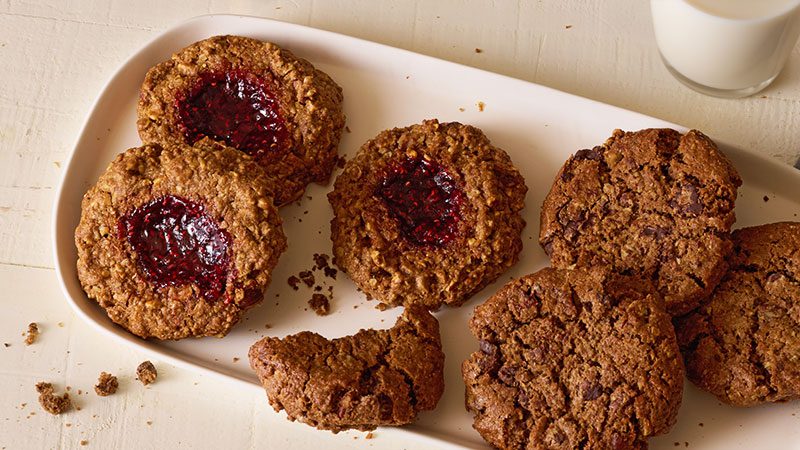
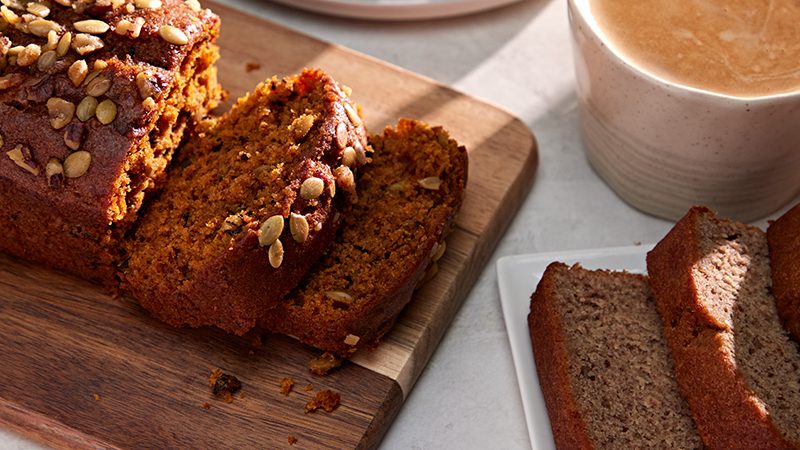
Eating a pecan chocolate-chip cookie, a slice of banana bread, or many other PCC baked goods had a measurable environmental benefit this year. The treats were all made with Kernza, a “climate-smart” perennial grain.
In the first nine months of sales, the new line of PCC cookies, tea breads and cakes, made with a mix of Northwest-milled Kernza and Cairnspring Mills flours, used more than 3 tons of raw Kernza flour, said PCC Director of Purpose Mike Wenrick. Calculating the sequestered carbon and the avoided emissions from conventional wheat, he estimated the project eliminated about 11 tons of carbon dioxide from the atmosphere, equivalent to the annual emissions of three U.S. cars.
Kernza, a trademarked grain overseen by the nonprofit Land Institute in Kansas, is still only planted on 3,270 acres in the U.S. That’s a tiny fraction compared with the acreage of conventional wheat. PCC’s share isn’t huge in the big picture of pollution and climate change — but it’s an inspiring step in broader ways. That’s because of a Kernza impasse that a recent U.S. Department of Agriculture report called a mismatch between producers and buyers. Farmers are reluctant to invest in the multi-year crop without knowing they can sell the grain; buyers are reluctant to commit to purchasing it without knowing if the flour will sell.
Kernza at PCC
The ongoing baking project, with recipes developed by PCC Fresh Program manager Robin Bellina with retail deli merchandiser Tristan Ambrose, is believed to be the first large-scale use of Kernza in grocery baked goods. More than a niche project, Wenrick noted, it’s been “embedded” in the bakery and is used in bestselling products. Bakers have learned how to work with the grain’s different flavor profile and baking qualities, incorporating it into recipes where its deep, slightly sweet flavor and high protein content are a plus. Because of its lower gluten content, it’s generally better as part of a flour blend rather than used alone. Because of its relatively new status, there aren’t many established recipes or standardized milling processes, much like the initial market for small-batch locally grown wheat when it saw a resurgence in the early 2000s.
The project was one of 10 new initiatives using the trademarked grain listed in the recent national report, part of a project aiming to use Kernza to “activate transformational change in agriculture that improves the environment and rural prosperity.” Other 2025 projects included General Mills’ Cascadian Farm brand incorporating 1% Kernza grains in prominent cereals and Perennial Spirits launching a Kernza vodka. (On the downside, Patagonia Provisions discontinued its nationally produced Kernza pastas due to weak sales, the report said.)
The future of Kernza
By purchasing and appreciating the treats, PCC members and shoppers showed there was a demand for such “climate-aligned foods,” Wenrick said, hopefully prompting larger businesses to support a proven regenerative win. In the process, along with the direct emissions reduction, they’re supporting farming systems that build soil carbon, reduce erosion, improve biodiversity, and enhance water infiltration and drought resilience, Wenrick said.
Most grains, including conventional wheat, must be replanted yearly, and require more fertilizer and tillage. Kernza’s deep root system stores carbon year-round, improves water retention, and prevents erosion. It’s not as productive as conventional wheat, but researchers hope that with time and study its yields can be increased.
The co-op’s “if you bake it, they will come” approach was in line with the results of a recent study on the “grain of the future” published in the journal Agricultural Economics. That study concluded that there is demand for products using Kernza, so long as consumers understand the grain’s environmental benefits — and, crucially, so long as they taste good.
LEARN MORE ABOUT KERNZA
Find cookies, tea breads and other baked goods made with Kernza flour at PCC stores.
Learn more about PCC’s work with the perennial grain here.
Keep up with the latest in Kernza at this website.