How PCC Made An Impact in 2025
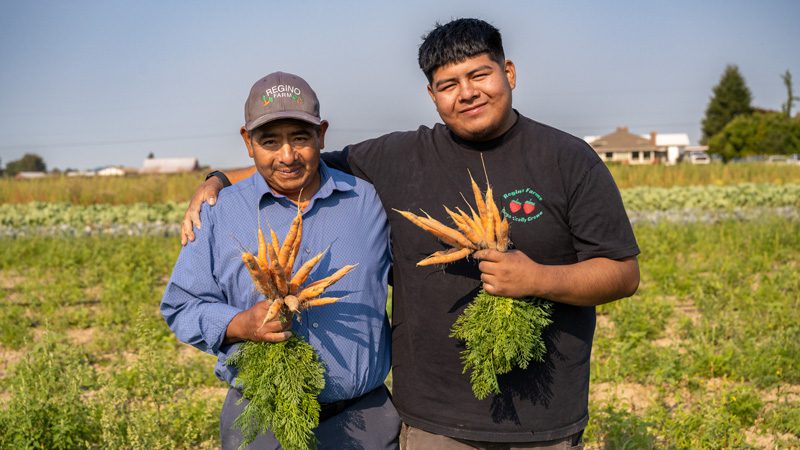
Regino Farms carrots for the Growing for Good program supported by roundups at PCC registers.
Grain by grain, farmer by farmer, partnership by partnership– no matter how it’s counted, PCC Community Markets and its members made a difference in 2025.The annual Co-op Purpose Report details the year’s progress in sustainability, advocacy, and other initiatives, along with co-op finances, staffing and membership updates.
The full report, including detailed financial data and the latest figures on emissions and energy use, is online here. Highlights include:
- The co-op gained nearly 5,000 new members in 2025, with membership approaching 123,000.
- PCC had 1,671 total employees, of which 1,443, or 86.36%, are unionized store staff. In 2025, 51% of open store management positions were filled by promotions of internal candidates. PCC’s median tenure of 3.92 years is nearly double the national median tenure for food service workers.
- In 2025 PCC and its members and shoppers together contributed $11.08 million to the local community in in-kind donations and cash. This included $726,379 toward Growing for Good, an award-winning collaboration between PCC, Neighborhood Farmers Markets and Harvest Against Hunger, where farmers grow fresh, local produce for local hunger relief agencies.
- Co-op sales included $212 million in certified organic products and $178 million in locally sourced products. About $4.5 million in sales were supported by SNAP benefits.
- While total energy use increased with the opening of PCC Corner Market, PCC reduced key emissions, especially those from refrigerants and fleet fuel, through targeted improvements like enhanced leak detection systems.
- PCC embarked on what’s believed to be the first large-scale grocery use of Kernza, a trademarked “climate-smart” perennial grain. Developing new recipes for cookies, tea breads and more, the co-op sold 36,200 Kernza products and became a successful test case showing other bakers and grocers that Kernza products can taste great and sell well.
- More than 100 vendors participated in PCC’s Inclusive Trade program representing more than 1,200 products on the shelf. (Read more about the program here.)
- Among other efforts to reduce plastic waste, PCC piloted compostable mesh bags in a program with Organically Grown Company (OGC), a Portland-based distributor and major PCC supplier. The bags are made from plant-based fibers, offering a new alternative to traditional plastic packaging. The switch could eliminate more than 100,000 plastic bags annually. (Learn more here.)
- Students at Interagency Academy gained inspiring cooking skills in a collaboration between PCC Community Markets, Solid Ground, Organically Grown Company and Interagency Academy, funded by the “Farm to School” apples sold at PCC stores. Learn more, and see the program in action in this video.
- PCC set guidelines for which products can be labeled as “regenerative,” to help address greenwashing and avoid misleading marketing and advertising. Learn more.
- In response to our region’s growing food insecurity crisis, PCC established a $50,000 seed fund and invited fellow local co-ops and industry partners to join in. This collaboration ultimately raised nearly $600,000 in cash and donated goods supporting more than 100 regional hunger relief agencies. (Learn more here.)