
The new art of baking gluten-free bread
By Sheryl Wiser, guest contributor
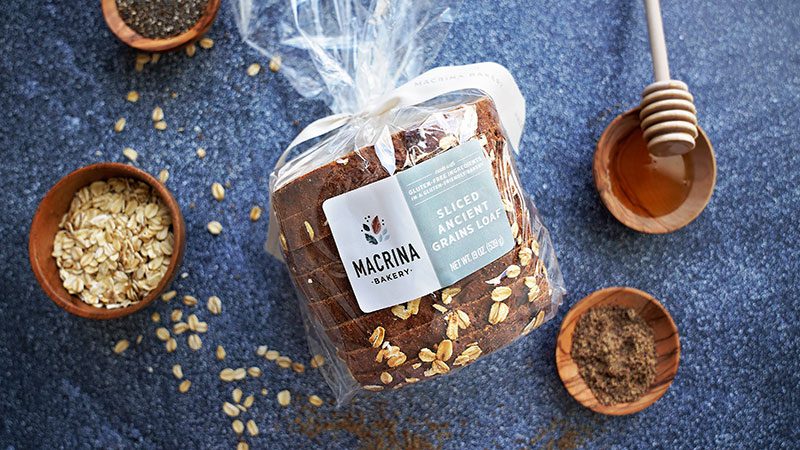
Photo courtesy of Macrina Bakery
It’s time to give gluten-free bread another try.
More than any other season, winter brings on the desire for a hearty slice of warm, crusty bread to dunk in soups, stews, and chili (or savor all on its own). For the gluten-free (GF) among us, this used to be a major challenge. But there’s good news! If, like me, you’ve had to search out artisan bakeries for delicious and nutritious gluten-free breads, there’s new hope – for broader access to great bakery loaves, and for making successful gluten-free breads at home.
For home baking, I don’t just mean the 1:1 flour substitutions in pre-made baking mixes. You can now make multi-grain loaves that are astonishingly moist, deeply flavored, nutritious – and designed to satisfy your own particular taste buds.
What’s different in baking gluten-free bread
What changed?
For starters, over the past few years, both commercial and home bakers have overcome many earlier challenges to gluten-free baking, improving the once-inevitable dry, crumbly textures. They’ve done so through shared knowledge, including a wealth of cookbooks, blogs, and online communities that cater specifically to gluten-free baking, with recipes, tips, and support.
Leslie Mackie, founder of regional icon Macrina Bakery, credits both improved knowledge of how to work with gluten-free baking flours as well as a change in the flours themselves, with an added emphasis on ancient grains and more nutritious ingredients. (While not all ancient grains are gluten-free, many are, including amaranth, buckwheat (technically a seed), millet, quinoa, sorghum, and teff.)
Mackie, whose gluten-free baked goods can be found at PCC stores, is incorporating grains like teff and sorghum into her gluten-free loaves, which she says are “making things more interesting, more flavorful, and more similar to regular bread.” Mackie also bakes with brown rice flour, chia seeds and flax seeds, tapioca flour, and potato starch.
Emulsifiers are another key — they enable the structure that gluten provides in conventional doughs.
“I think people are learning to incorporate different emulsifiers like chia, flax, and psyllium, which hold a decent amount of nutritional value,” Mackie said. “When gluten-free baking first started, it was all the rice flours, which translates into the body as sugar.” Those ingredients also had a less familiar texture for people accustomed to wheat breads.
Common mistakes to avoid in gluten-free baking
Longtime local baker Abby Karp knows both the gluten-rich and gluten-free sides of baking, thanks to her work in Seattle outlets like Zylberschtein’s Delicatessen & Bakery as well as her own new online bakery, Bread Winner.
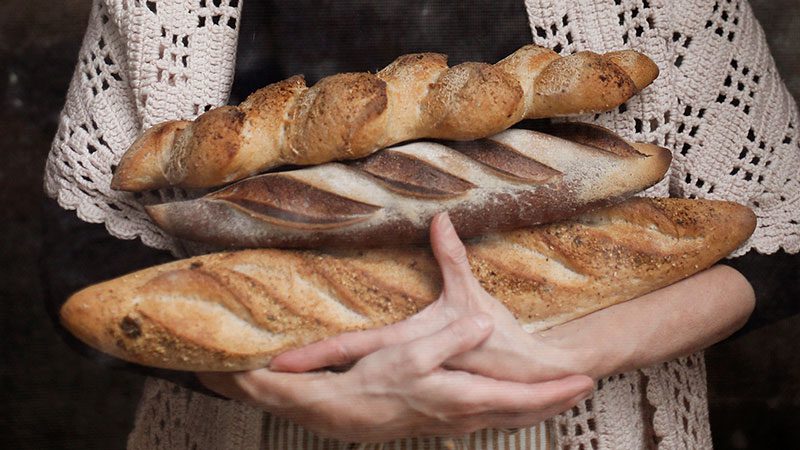
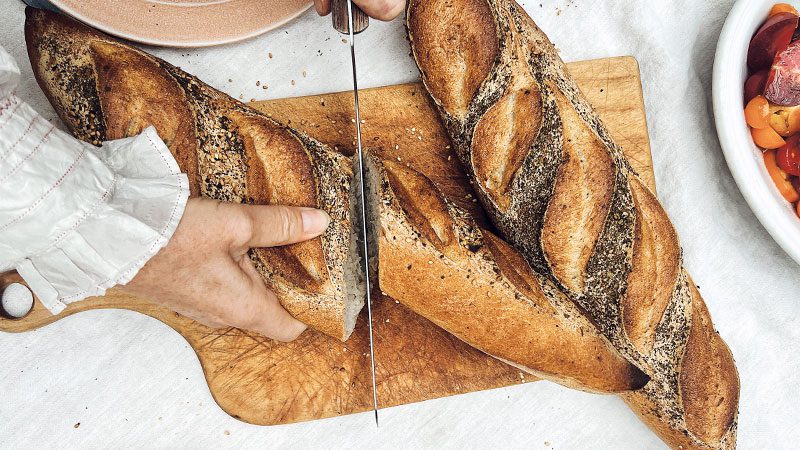
While Karp excels at everything from babka and buns to remarkable seasonal pies with gluten-free crusts, she says her real specialty is sourdough bread. Her gluten-free sourdough starter is a mixture of brown rice and buckwheat flour, giving the bread an earthy, savory flavor, which toasts beautifully and stands up to the dunk test. “You would be amazed at how well sourdough bread transfers to being gluten-free,” she said recently from her Mercer Island kitchen.
For peak success, Karp advises home bakers to embrace the science of the process (some of her favorite resources are included in the box below). “Gluten-free and/or dairy-free baking is a process that is not as straightforward as following a traditional recipe. Baking in general is a science and requires precision.”
The most common mistake Karp sees home bakers make is depending on 1:1 substitutions of gluten-free flour for all-purpose or bread flour. “Most breads require multiple types of gluten-free flours to replicate the taste that wheat breads provide. GF baking is not a simple swap of flour.” Her go-to flours include sorghum, brown rice, millet, oat, almond, and buckwheat from Skagit County’s Fairhaven Mill, which sources from local farms.
Karp uses roughly 10 different gluten-free flours in various combinations, usually 2-3 in a single recipe, depending on what she’s baking.
Mistake #2, from her observations: Measuring by volume rather than weight. Weighing ingredients is more accurate and leads to more consistent results. (Many also argue that it’s easier.)
Finally, she advises against using tap water for gluten-free sourdough loaves. Tap water works for gluten-free yeast breads, she said. But she recommends filtered or distilled water for gluten-free sourdough, crediting gluten-free sourdough baker Mary Thompson with helping her to understand its importance.
“I use filtered or non-chlorinated water so that the microbial ecosystem of the sourdough starter (which is foundational for rise, flavor, and structure, especially in gluten-free breads) isn’t hindered by chlorine or other tap-water treatments.,” she said. “This helps ensure the dough performs better, which is particularly important when you’re working without gluten’s usual structural support.”
In short, says Karp, filtered water helps the starter perform consistently.
She also advises bakers not to assume that GF products will look the same as non-gluten foods. “Gluten-free breads often look different because they build structure and trap gases in completely different ways. Without gluten’s elastic network, they rise and brown differently, often denser, moister, and less open-crumbed — even when perfectly baked.”
Her final advice: Patience. “Perfecting anything takes many trials, tests, and failures before cracking the code.”
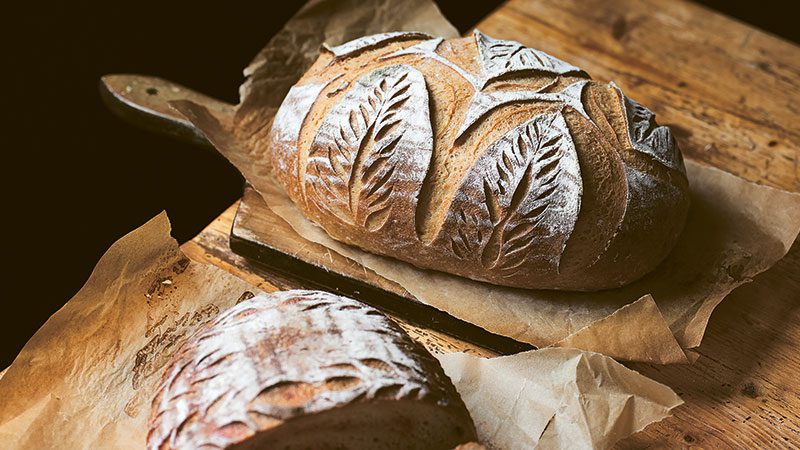
One of my own favorite gluten-free sourdoughs comes from Lopez Island’s Barn Owl Bakery, owned by baker and farmer Sage Dilts with her husband, Nathan Hodges. Dilts combines brown rice, sorghum, and tapioca in their recipe. She credits the brown rice used in the sourdough starter as providing the sole raising power for the bread and “the key to a full, rich flavor and better digestibility.”
Dilts also credits sorghum for giving the bread a delightful nutty flavor, and the tapioca for providing some amount of airy structure. Additional ingredients include a cooked porridge of quinoa, amaranth, and millet, along with flax and psyllium husk to provide some elasticity, with salt and a bit of olive oil to round things out.
Her advice, similar to Karp’s, is allowing for time and experimentation to be your guide, rather than perfection on the first attempt .“The world of sourdough gluten-free baking has sure come a long way since we first started experimenting with our gluten-free recipe ten years ago,” says Dilts. She suggests choosing your recipes with care.
“There are plenty that will guide you through the basics of fermenting with alternative flours – although watch out, many books will claim “sourdough” but then sneak in commercial yeast or chemical leaveners. Not in itself a bad thing, but if you’re looking for a pure gluten-free sourdough, it’ll take more time and experimentation to learn how to make a good loaf.”
The most crucial aspect for sourdough, whether regular or GF, is getting your starter right. “We feed our brown rice sourdough starter at least once a day and adjust the temperature and amount of water depending on the season to get a ferment that’s lively, sweet, and a bit acidic.”
You can ferment any grain, says Dilts, who has tried buckwheat, oat, sorghum, and millet. While each one has a different flavor profile and character, she finds brown rice reliable and delicious. She also recommends starting with quality ingredients and not storing them for too long, as the oils in whole grain flours can easily go rancid. She also leans on the mantra of practice. “Successful sourdough gluten-free baking is a matter of nuances – things that don’t often get mentioned in recipes and videos – and are generally easiest to learn through practice. Get a starter going, choose a few basic flours and a binder, and see where the journey takes you.”
How Gluten Free can be Climate Friendly
Gluten-free flours also have an unexpected bonus: Promising climate resilience.
Caroline Saunders, a Brooklyn-based writer, recipe developer with a passion for climate cuisine and sustainable food, has been evaluating gluten-free grains from a “climate-friendliness lens.” In a recent piece on her climate-friendly Substack Pale Blue Tart, she writes, “for a more resilient future for grain agriculture, baking with lesser-known, resilient flours as a great place to start.” Saunders praises gluten-free millets (plural, as there are many different species, including teff and sorghum, although Saunders calls millet more of a folk taxonomical classification than a botanical one.)
“Millets are looking like good diversification options for some farmers in parts of the U.S. that are getting drier, especially in the Plains region, which is currently growing proso millet at a small but growing scale,” she said. Saunders also says there is good evidence to suggest that “sorghum is drought-resistant, though not quite to the degree of proso millet.”
Another flour to consider is buckwheat: It’s naturally gluten-free, high in protein, fiber, and health-supporting flavonoids, and more drought-resistant than wheat and spelt under extreme conditions, according to Saunders. Buckwheat is no grain, but a pseudocereal and works beautifully in cakes, cookies, and bars. Its dark, molasses-like flavor adds deep character to baked goods, and can lend richness and moisture without being cloying.
Final buckwheat tip: Because it doesn’t contain any gluten, buckwheat is not a one-to-one substitute for recipes that use wheat flour, particularly where the structure of gluten is essential.
The Art of Gluten-Free Bread
For home baking lessons, we’re lucky to have a global expert as our local guide. In her fourth cookbook, The Art of Gluten-Free Bread: Groundbreaking Recipes and Innovative Techniques for Artisanal Breads and Pastries, award-winning Seattle author Aran Goyoaga shares her secrets to the perfect gluten-free loaf and offers 100 recipes for the breads and pastries that those with gluten intolerance dearly miss. She says her recipes are for anyone who loves to bake, not just those who are gluten-free.
That hit a sweet spot in my own mixed-gluten home, drawing in my husband, baking industry veteran Rod Neldam, along with my gluten-free self.
Neldam, founder and former longtime owner of Seattle’s beloved Grateful Bread, had not done any GF baking before opting for two of Goyoaga’s recipes – Sweet Potato and Millet Cross Bread and Yeast Free Sandwich Bread.
His take: The process is both art and adjustment.
“Just like baking with wheat flour, trial and error is necessary,” he said.. That applies to the “feel,” the tactile sense of whether the dry is too stiff or slack and the subsequent adjustments, the temperature and time that work best for a particular recipe (and individual oven!), among other variables.
It was fun, he said – but challenging.
“Gluten-free baking is completely different. Not knowing what the dough should feel like on my first attempts was a bit of a guessing game.”
Undaunted, he is ready for the next round.
Sheryl Wiser is a Seattle-based writer, consultant, and long-time advocate for local food systems.
Tips and further readings on baking gluten-free bread
Seattle author Aran Goyoaga compiles years of gluten-free baking experience in her latest book, “The Art of Gluten-Free Bread.” A sample of Goyoaga’s advice, from her latest book:
- A frustrating aspect of baking with gluten-free flours is the inconsistent milling between different brands. Goyoaga suggests looking for flours labeled as fine or superfine. She stores her flours in large glass jars in a dry and cool place away from direct sunlight.
- Note that breads made with baker’s yeast proof faster than those made with sourdough starter.
- Proper proofing is not always visible to the eye with gluten-free breads – it takes practice to recognize when the dough is fully proofed.
- Gluten-free breads tend to expand more sideways than upwards, so the vessel you use for proofing will affect the shape of the final loaf.
RESOURCES
(*notes Abby Karp’s recommendations)
The Art of Gluten-Free Bread: Groundbreaking Recipes and Innovative Techniques for Artisanal Breads and Pastries by Aran Goyoaga, 2025
*The Elements of Baking by Katarina Cermelj, 2024
For the Love of Buckwheat, Maria Depenweiller, 2024 (second edition)
*Gluten-Free Sourdough Baking: The Miracle Method for Creating Bread Without Wheat by Mary Thompson, 2022
Mother Grains: Recipes for the Grain Revolution by Roxana Jullapat, 2021
Gluten-Free Baking at Home by Jeffrey Larsen, 2019
Spruce Eats: Tips for Better Gluten-Free Bread
Gluten-free PCC recipes
Looking for gluten-free baking recipes? Check out some PCC’s highlights here. Recipes include Alicia’s gluten-free flour blend, gluten-free buttermilk biscuits, soft and chewy chocolate chip cookies, and chocolate almond flour crinkles.