PCC community steps up for food security
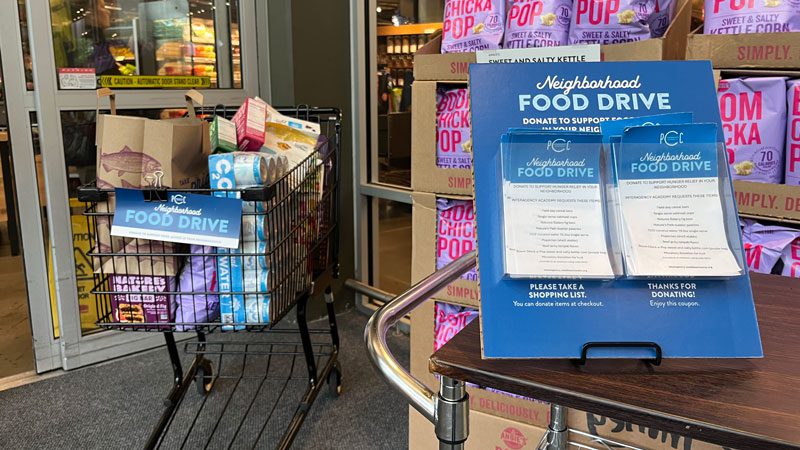
From register round-ups to 1250 pounds of locally milled flour, PCC members, shoppers and community partners joined an all-hands movement to increase access to food in our region. The effort in November and December raised more than $300,000 plus nearly $160,000 in donated food.
The campaign was sparked by recent interruptions and changes to the Supplemental Nutrition Assistance Program (SNAP) and Women, Infants, and Children (WIC) Nutrition Program, but addresses a broader need: Food insecurity remains a persistent challenge in our region. Visits to hunger relief organizations have steadily increased in recent years as resources have declined.
PCC launched a seed fund in November with $50,000 to support food purchases for hunger relief organizations, and invited partners to meet the need through financial or in-kind donations.
From individuals to organizations and businesses, the community joined in with enthusiasm and great generosity. And because the need does not end with the holidays, neither will the work.
In the most recent figures, PCC members and shoppers raised more than $128,000 for the campaign through donations and “rounding up” purchases at cash registers in PCC stores. Community members donated an additional $16,000+ directly to Harvest Against Hunger, a partner in this effort (as well as in PCC’s separate Growing for Good program.)
BECU matched PCC’s initial $50,000 contribution. As BECU foundation board president Jennifer Teunon put it, “cooperatives are built on the idea that we can do more together than we can alone.”
Organically Grown Company, a Portland-based PCC supplier, contributed $10,000. Others contributed money, food and sometimes both, including $15,000 from Charlie’s Produce, $140,000 worth of organic baby food pouches from Nature’s Path and roughly $5,000 worth of all-purpose flour from Cairnspring Mills, among many more. Fellow co-ops were essential partners, including cash register round-ups from Central Co-op. Reflecting the multiple crises that struck in the holiday season, some additional produce donations were derailed by floods that devastated many regional farms.
A full 100% of donated funds went directly to hunger relief organizations, including food banks, community kitchens, mutual aid organizations and more.
More than 100 organizations were reached in the first stage of the program, including collaborations to support around 275 community food boxes sent out before Thanksgiving through United Indians of All Tribes Foundation (UIATF) and Community Kitchen – That Brown Girl Cooks! Volunteers cooked, packed, delivered supplies, and otherwise worked together to bring food to their communities. Additionally, Growing for Good provided an additional $100,000 in contracts to provide local hunger relief organizations with produce form local farms (learn more about the program here).
The next step of the work includes creating a central hub for purchasing and delivering products to support the hunger relief system. It will provide longer-term space to source and store foods. Meanwhile, “round up” donations at PCC store registers are once again supporting Growing for Good, the partnership supporting resilience in the local food system.
We greatly appreciate these partnerships and supports and will keep you updated on future efforts. As Krish Srinivasan, PCC’s President and CEO, said, “As a community-owned food co-op, our mission has always been bigger than selling groceries.”