Organic produce has no off-season at Boldly Grown Farm
Story by Rebekah Denn, photos by Meryl Schenker
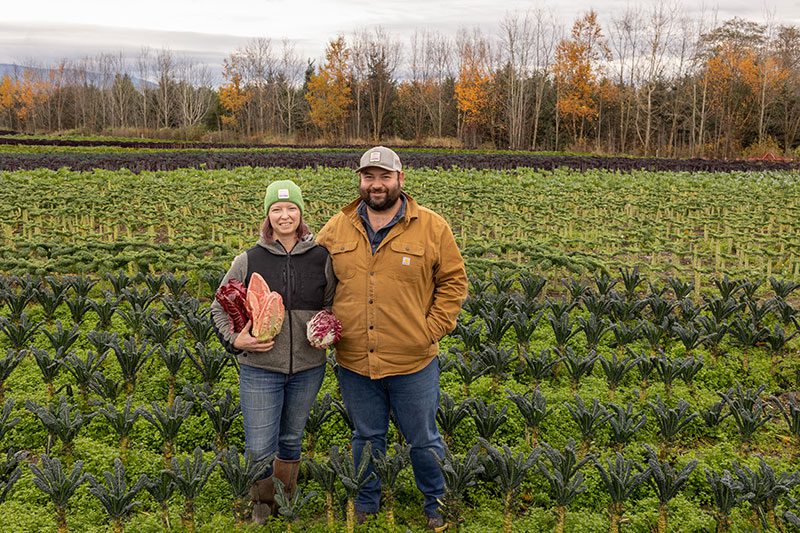
BOW, SKAGIT COUNTY – There’s no off-season at Boldly Grown Farm.
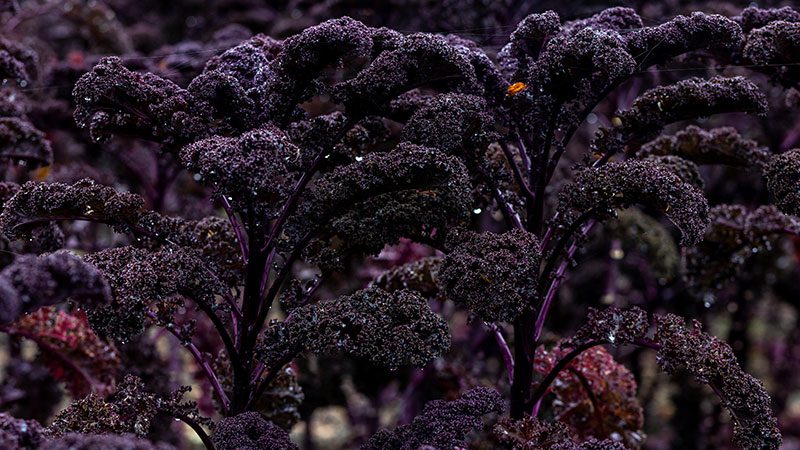
That’s rare in the Northwest, where dwindling daylight hours and chilly temperatures exhaust most crops by late fall. But for Amy Frye and Jacob Slosberg, a spectacular array of cool-weather crops like winter squash, kale, carrots and cabbages stretch their season year-round on 45 acres of working farmland.
“The goal is to have cabbage through St. Patrick’s Day,” said Frye on a cool fall day where crews were harvesting from their three acres of cabbage fields. Like a Valentine’s bouquet, fields of red Costarossa radicchio and pinker variants were thriving in the distance, past rows of a new garlic-leek hybrid.
Boldly Grown supplies PCC stores through Portland-based distributor Organically Grown Company. It’s an unusual — and inspiring — farm in a few ways.
Meet Boldly Grown Farm
Boldly Grown began in 2015 as a one-acre project on Viva Farms, a non-profit training program and testing ground for prospective new farmers.
Frye and Slosberg weren’t technically beginners. They met at the Centre for Sustainable Food Systems at the University of British Columbia, gaining experience in management as well as growing through its farmers market, Community Supported Agriculture (CSA) subscriptions and restaurants. Slosberg grew up in Seattle, Frye was raised in Minnesota near her grandparents’ farm.
Early on, they thought strategically about sustainability. It’s been an education every step of the way.
“Growing things, I don’t want to say that’s the easy part of it, but…being an entrepreneur and business owner is very different than just farming,” Frye said.
Why grow organic food?
Organic farming was a foundational requirement.
“We both really got into farming because of our environmental values. Jacob’s degree was in agroecology, mine was in resource management and environmental studies,” Frye said. “And at some point I realized if I cared about the environment, I had to care about how my food was grown.”
Economies of scale were also essential skills. “Both of us were very interested in, how do we grow a lot of food and feed a lot of people, especially in the winter months?”
The couple doubled from one Viva acre to two after their first year, then kept leasing more acreage on different sites, surpassing 20 acres of crops. After years of searching, they found their own Bow property in 2021 — a former dairy farm with crumbling buildings and weedy pastures, just small and quirky enough to elude bids from big-time investors and requiring too much investment for smaller growers. Certified salmon-safe, the property is on the Samish River, with an 8-acre riparian buffer and dozens of species of birds.
After a solid year of preparation, it was ready for crops.
The couple and their crewnow farm 35 tillable acres on their 60-acre site, plus more rented land on long-term leases nearby for crop rotations and expansion. With the help of grants, they’re working on a new building created for their needs, consolidating more storage space, packing space, offices and more.
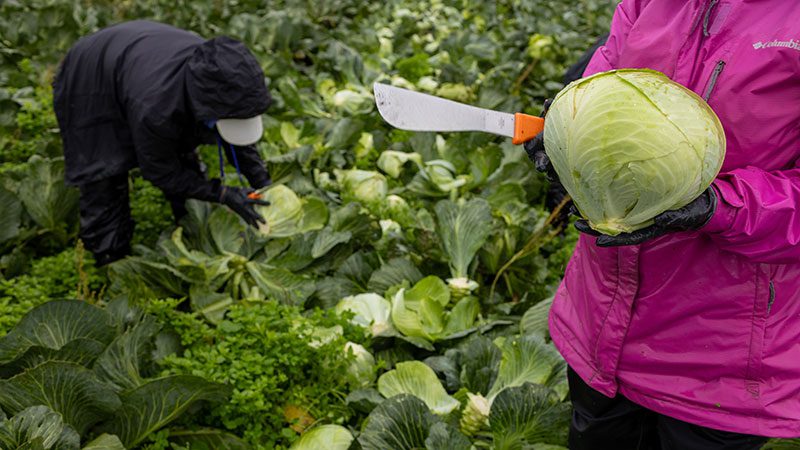
Unlike many starting farmers, Boldly Grown didn’t show up at farmers markets or sell to restaurants. Instead more than 75% of their crops are sold wholesale stocking grocery stores. (They also have a farm store and CSA.)
Some 93% of organic sales occur in grocery stores, according to the Organic Trade Association. The focus made sense for labor and was “a way to reach the most people and kind of move the needle in terms of people buying local and organic,” Frye said.
The needle keeps moving. “We maxed out our second year growing here and just continue to have more demand for our products, which is basically why we’ve kept increasing our acreage ever since the beginning.”
Adding staff was part of the plan too, especially as their family grew, with two young children. A larger farm with year-round crops could support a stable year-round crew (they currently employ 20 people, 12 of them full-time). That way, one worker or owner getting sick or taking time off doesn’t derail everyone’s schedule.
A harvesting machine a few years ago also revolutionized the process.
Storage space remains a challenge for their abundant winter squash varieties and root crops: They rent some from a neighboring berry farm, whose coolers are empty in the winters right at Boldly Grown’s peak. They’re building a new facility now, with the help of state and local grants, part of an ever-changing puzzle.
Organic vegetableS for every season
With around 10 varieties on six acres, radicchio is now their second-largest crop in terms of sales, after kale, making them one of the largest suppliers in the Northwest.
“We focus a lot on the staples. This is clearly an exception,” Frye said. But the bitter greens grow well here, work well in crop rotations and are pest resistant. Marketing programs like the local Chicory Week have made them more familiar to shoppers.
As they settle into the property, they’re able to think smaller and on a community level too. They planted fruit trees last year, and Frye is growing organic calendula and other medicinal herbs.
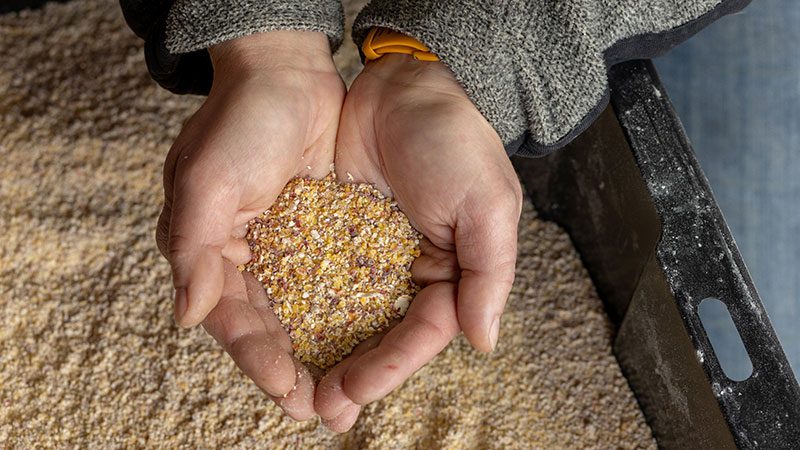
With the help of a Tilth grant, they went in another direction too, purchasing a seed and grain cleaner that is allowing them to branch out into dried beans, seeds and more. That move was intended to add rotational crops and increase local food sovereignty in an era when most seed companies are owned by a few giant corporations. It also allowed small and mid-size farms to enter that field: Existing grain elevators and seed handlers in the area required much larger batches to operate, but the smaller machine is more flexible.
Last year Boldly Grown produced beans, wheat berries, rye berries and oats with the help of the machine. The nearby Breadfarm bakery is milling their Skagit 1109 wheat into flour. They harvested flint corn that makes a fine cornmeal and polenta. “It’s capital intensive. There’s a lot of equipment for it that you don’t use for vegetables,” Slosberg said. But it provides good cover and rotational crops — and community resilience. Part of Slosberg’s intention, he wrote in the original grant application, was sharing the machine with nearby producers as a community resource. Three other farms have used it already.
It’s still not exactly easy. Slosberg was only able to leave his full-time job off the farm in 2024. New roles are constantly added to their job descriptions: building contractor, human resources manager, active constituents for local legislation.
“A mentor of ours had a saying, “Farming isn’t rocket science, it’s harder,” which I love… You have to know so many different things,” Frye said.
Now in their 11th season, feet firmly planted on their own land, they’re ready for even longer-term plans.