PCC sets guidelines for regenerative labels
PCC is taking steps to make sure the word “regenerative” carries real weight.
The term is becoming a prominent way for companies to indicate their products are better for people and the environment. In some cases, those claims are supported by third-party certifications and shoppers can look up the exact requirements backing them. But “regenerative” is also being used as a vague marketing term, at risk of becoming as undefined and meaningless as the word “natural.”
In response, PCC has adopted new internal guidelines meant to ensure the claims on products PCC sells are verifiable and don’t mislead who rely on the co-op for responsible sourcing. PCC will support regenerative claims on products only when they are substantiated by credible third-party certification or accompanied by a transparent explanation of practices that satisfy PCC’s criteria for the term.
“The regenerative movement is still taking shape, and that’s what makes this moment so exciting. If we can align around credible standards and transparency, regeneration can truly transform how we grow food and care for the planet, from depletion to renewal,” said Mike Wenrick, PCC’s Director of Purpose.
“PCC’s new guidance is meant to help ensure the term ‘regenerative’ lives up to its promise, grounded in accountability and tied to measurable improvements for soil, water, biodiversity, and climate resilience. We hope this approach influences how producers manage land and how retailers ensure integrity in regenerative product claims. It’s one step toward a food system that restores more than it takes.”
Under the new guidance, the co-op’s quality standards team will review and approve all regenerative label claims. Vendors who change related packaging or labels must let PCC review the changes before they appear in stores, and new products with such labels will be monitored by the co-op’s quality standards manager.
A recent internal survey found that 187 products at PCC made “regenerative” references on the label. Just 79 of those products were certified regenerative, but the majority that made the claims on the front of the package, where they are most visible to shoppers, were certified.
What are PCC’s requirements for regenerative labels?
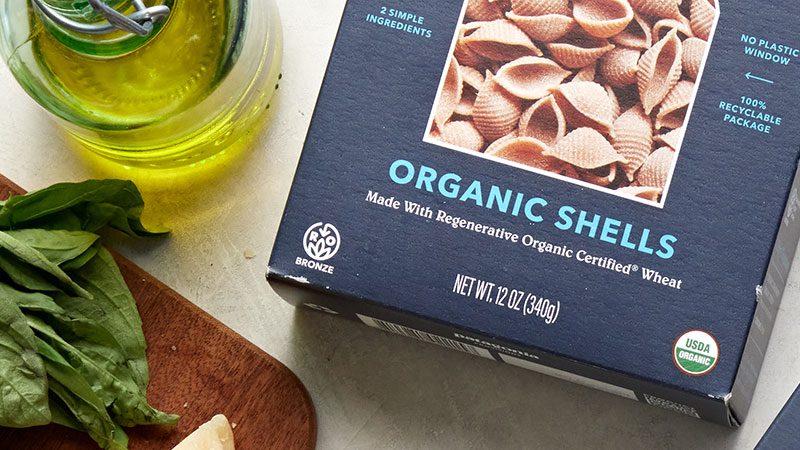
PCC’s new requirements for regenerative label claims are strictest for products that place claims on the front of their packages. If the whole product is marketed as “regenerative” then it is expected to have a third-party certification, such as Regenerative Organic Certified or Demeter Biodynamic Certified. PCC will also accept regenerative claims on the front of the package when the majority of the ingredients are certified as regenerative, and it’s clearly labeled which ingredients are regenerative. An example of the latter would be “Made with Regenerative Organic Certified cacao and oats” on a product where cacao and oats constitute at least 70% of the whole product.
Certified organic items can have regenerative claims on front labels without a third-party certification for regenerative, if the majority of the product’s ingredients are produced on farms employing at least three specific regenerative practices. Drawing from reputable sources such as the Rodale Institute or USDA organic regulations, PCC has identified a number of agricultural practices that create regenerative systems. “While we offer more flexibility for organic products, we do require some assurance that those brands are engaged in practices that truly regenerate the soil and agroecosystem,” said quality standards manager Rebecca Robinson.
Claims on the back of packages do not have to be supported by certifications, but must describe specific regenerative practices, such as rotational grazing and cover cropping. They must avoid vague or unverifiable language. PCC will review those claims and producers are encouraged to provide supporting data.
Why PCC requires facts backing regenerative claims
PCC has strict and transparent standards for the products it carries (available online here), continually updating its existing rules and occasionally adding new ones. The co-op has been involved in the emerging and promising field of regenerative agriculture, such as holding a regional convening on what it is and what it can become.
Loosely, PCC defines regenerative agriculture as a system of agricultural practices that prioritize soil health, biodiversity, water retention, and climate resilience. Some definitions also include animal welfare and social fairness. The problem, though, is that there is no universal definition for the word or required way to back up producer claims.
Unlike the USDA Organic label, there are not government rules governing the term regenerative or consequences for improper use.
Encouragingly, individual certifying agencies are certifying products as regenerative, some with strong requirements and clear explanations of what their labels guarantee, but the results can still be tough for shoppers to decode. As the term has taken off it’s in danger of being “greenwashed” into a phrase that implies good practices without guaranteeing them.
PCC’s new guidelines are initially being adopted as guidance for store merchandisers rather than a formal policy. This will allow staff to improve awareness and oversight, and work with vendors to change packaging that is potentially misleading. “As always, we’d rather companies improve their marketing and messaging, vs. just removing items from our shelves,” Robinson said, but it could come to that if the two sides can’t come to an agreement. After testing the internal policy, PCC ultimately hopes to move forward with a formal quality standard for regenerative products.